Overview
Protecting Tasmania together
Keeping emergency services connected across Tasmania hasn’t been simple. Vast wilderness areas, rugged mountains, remote coastlines and dispersed communities create unique challenges for responders working to protect lives and property. Following a major review of emergency communications, the Tasmanian Government partnered with Telstra to rethink how agencies communicate during everyday operations and large-scale emergencies.
The result was the Tasmanian Government Radio Network (TasGRN), a statewide communications network designed to help support faster coordination, stronger collaboration and more effective emergency response. Today, TasGRN helps connect the people and organisations responsible for keeping Tasmanians safe, providing a foundation for emergency communications across the state for years to come.

-
0+7,500+ users get connected on a single emergency communications network.
-
0135 sites delivering statewide critical communications coverage
-
0km120km offshore extending communications beyond Tasmania's coastline.
Challenge
Breaking down barriers
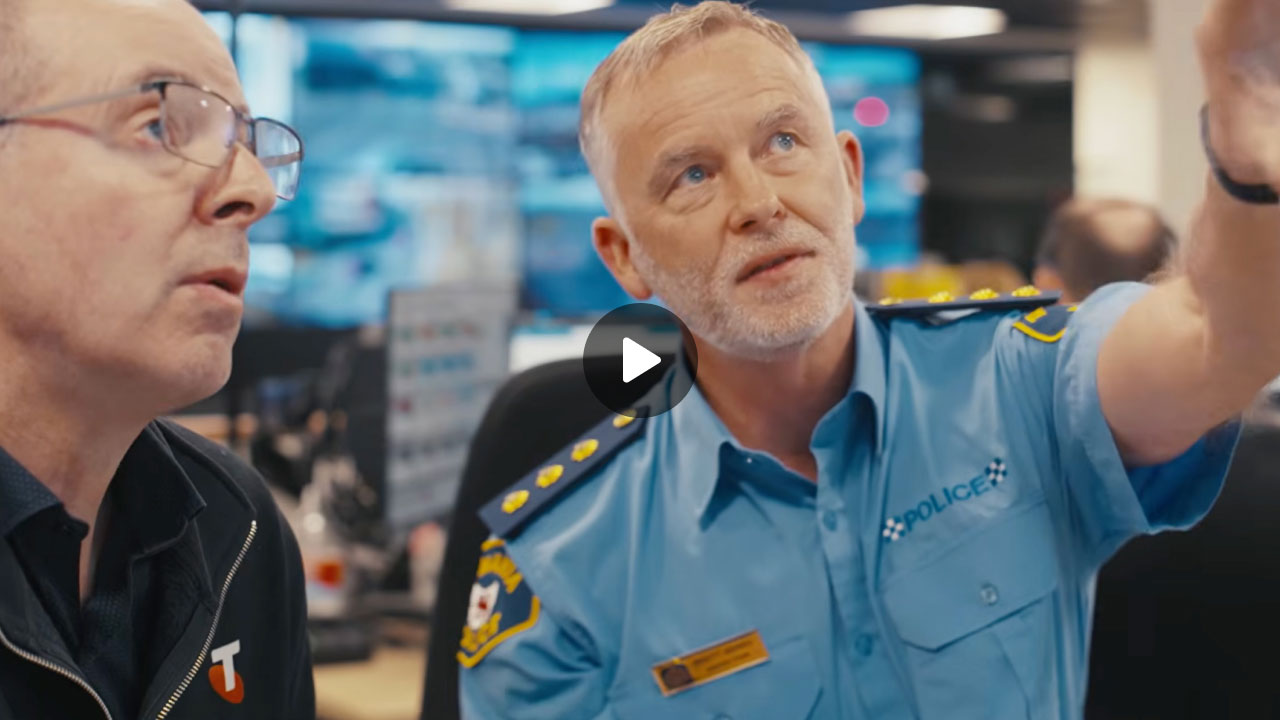
For many years, Tasmania's emergency and essential services operated across five separate radio networks. Police, fire, ambulance, forestry and energy agencies each relied on different systems, making it difficult to communicate and coordinate during multi-agency incidents.
The challenge was compounded by Tasmania's geography. Dense forests, mountainous terrain, remote communities and thousands of kilometres of coastline created coverage limitations that could affect responders working in critical situations. During major emergencies such as bushfires and large-scale rescue operations, agencies often needed to share information quickly across organisational boundaries, but existing systems were not designed for seamless collaboration.
The need for change became particularly clear following the 2013 bushfires, which highlighted the importance of better communication and coordination between agencies during major emergencies. A subsequent independent review identified the need for an interoperable, more secure and confidential communications system capable of supporting coordinated emergency response across the state.
To help support safer, more connected operations, agencies needed a communications platform that could improve coverage, strengthen security and enhance interoperability.
Our emergency service workers have highlighted the need for reliable interoperability in radio communications to support effective responses to emergency situations.
Felix Ellis
Tasmanian Minister for Police, Fire and Emergency Management
Solution
Connecting every agency
With a clear need for greater interoperability, coverage and security, the Tasmanian Government partnered with Telstra to help transform emergency communications across the state.
The result was the Tasmanian Government Radio Network (TasGRN), a P25 communications network that brings together eight emergency and essential service agencies on a single platform. Designed to help improve coverage, interoperability and security, the network helps responders get connected across a wide range of operational environments.
The network spans 135 sites and integrates multiple communications technologies into one connected ecosystem. It incorporates radio communications, smartphone access, satellite connectivity, Wi-Fi integration and Triple Zero operations, helping agencies maintain communications across remote, regional locations.
The network also supports police vessels operating far offshore, where traditional communications can be limited. As Tim Rutherford, Chief Information Technology Officer at the Department of Police, Fire and Emergency Management notes, search and rescue teams can operate in waters where "the next thing is Antarctica", making more reliable communications particularly important for crews working in remote marine environments.
Additional capabilities including encryption, GPS location tracking, emergency duress functionality and a 24x7 managed service help support responder safety, security and operational effectiveness. Agencies can operate independently through dedicated channels while also accessing shared communications pathways whenever coordinated responses are required.
What this radio network enables us to do is to make us faster in our response. We have substantially better coverage than we had before and as a safety mechanism that is quite significant.
Tim Rutherford
Chief Information Technology Officer at the Department of Police, Fire and Emergency Management
Approach
Designing around users
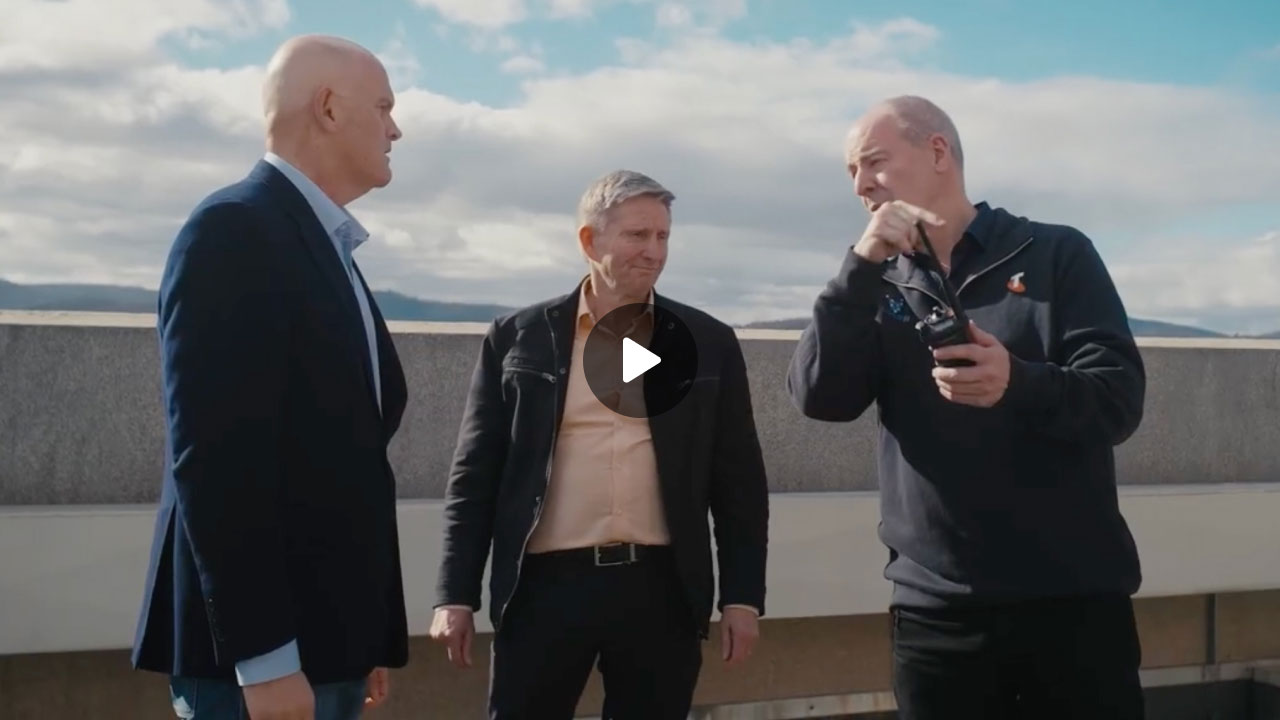
Rather than simply replacing infrastructure, Telstra worked closely with the Department of Police, Fire and Emergency Management and participating agencies to understand how communications were used in the field. Emergency responders, operational leaders and technical specialists contributed to the design of a solution that reflected the realities of Tasmania's operating environment.
Delivering the network demanded more than just technical expertise. The project required extensive collaboration across multiple organisations, balancing different operational requirements while working towards a shared objective. Teams worked across remote and environmentally sensitive locations, navigated complex approval processes and maintained progress through pandemic-related disruption, while balancing the operational requirements of multiple agencies working towards a shared objective.
By bringing together government, technology partners and frontline users, Telstra helped create a communications platform shaped around the realities of emergency response. The result was not only helping to create broader coverage and stronger interoperability, but clearer communications that help responders share information, coordinate actions and operate with greater confidence in the field.
They [emergency responders] said it was a gamechanger. They were amazed they could talk to someone and that they could understand what they were saying. But most of all, they said it meant they felt safe.
Tim Rutherford
Chief Information Technology Officer at the Department of Police, Fire and Emergency Management
Impact
A new standard
TasGRN has transformed how emergency services communicate across Tasmania, which is currently the only jurisdiction in the world where all emergency services operate on the same secure P25 network. For responders, that means better access to information and stronger collaboration. For communities, it means getting more connected and helping to create more capable emergency response network.
The network now supports more than 7,500 users and 2,500 vehicles across eight agencies, providing communications coverage across 75% of Tasmania's landmass and 85% of its coastline, including operations up to 120 kilometres offshore.
The impact of that connectivity can be seen in day-to-day operations across the state. During a recent search and rescue operation, a team member became disoriented in remote terrain and was unable to identify their location. Using the network's GPS capabilities, command staff were able to locate them and guide them back to a track in real time. For responders working in Tasmania's vast wilderness areas, capabilities like these can help provide an additional layer of safety when operating in challenging environments.
The platform has helped improve coordination between agencies, strengthened operational visibility and expanded communications into locations where coverage was previously limited. It has already supported emergency response activities including bushfires and search-and-rescue operations, giving frontline teams greater confidence when working in challenging environments. For responders working in isolated areas, the ability to get connected isn't simply a matter of convenience. It helps them work with greater confidence and safety.
More than a communications network, TasGRN helps to provides the foundation for a more coordinated emergency response capability across Tasmania. By helping agencies share information, collaborate more effectively and get connected in challenging environments, the network is supporting safer outcomes for both responders and the communities they serve.
When we talk about resilience, this is the last thing left standing on the island. If we lose all comms. If we lose all power. TasGRN keeps working.
Tim Rutherford
Chief Information Technology Officer at the Department of Police, Fire and Emergency Management
Related solutions and capabilities
Adaptive Networks
Power digital transformation with an adaptive network that's ready for innovation and change.
5G Solutions for Business and Enterprise
Be ready to harness the power of 5G for your enterprise today with Telstra.
Our network
Uncover our network solutions, engineered to optimise connectivity and enhance efficiency across your operations.