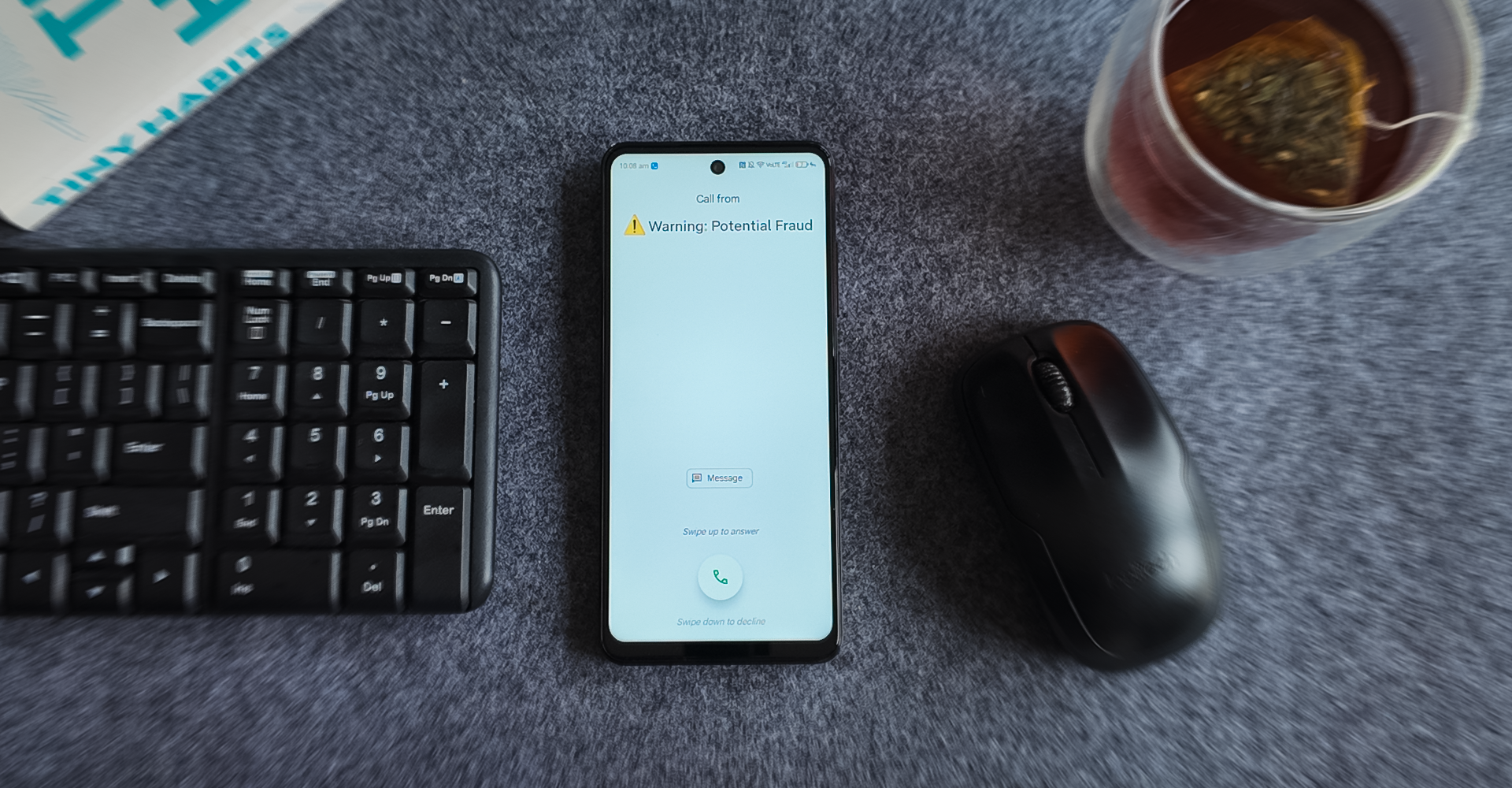
Scammers are flipping the script with an emerging tactic known as ‘callback’ scams. Instead of calling you out of the blue, they send messages that prompt you to call a number they control.
‘Scambling’: The fake gambling trap catching Aussies off guard at home
As online gambling in Australia has surged in recent years* more people are turning to digital platforms for a punt - often from the lounge at home. And scammers are following that shift at scale.
Darren Pauli · 03 June 2026 · 6 minute read
You’re most likely to spot a scam when you’re actively looking for one. The problem is the latest type of scam we’re seeing doesn’t show up when you’re on high alert.
It shows up when you’re on the couch.
Imagine it: Saturday night, feet up. You’re browsing on your laptop while the TV’s on in the background. Then a pop-up appears, bright, colourful, game-like, offering a bonus, a quick win, or a ‘verification’ step to claim your money.
That moment isn’t accidental.
What is scambling?
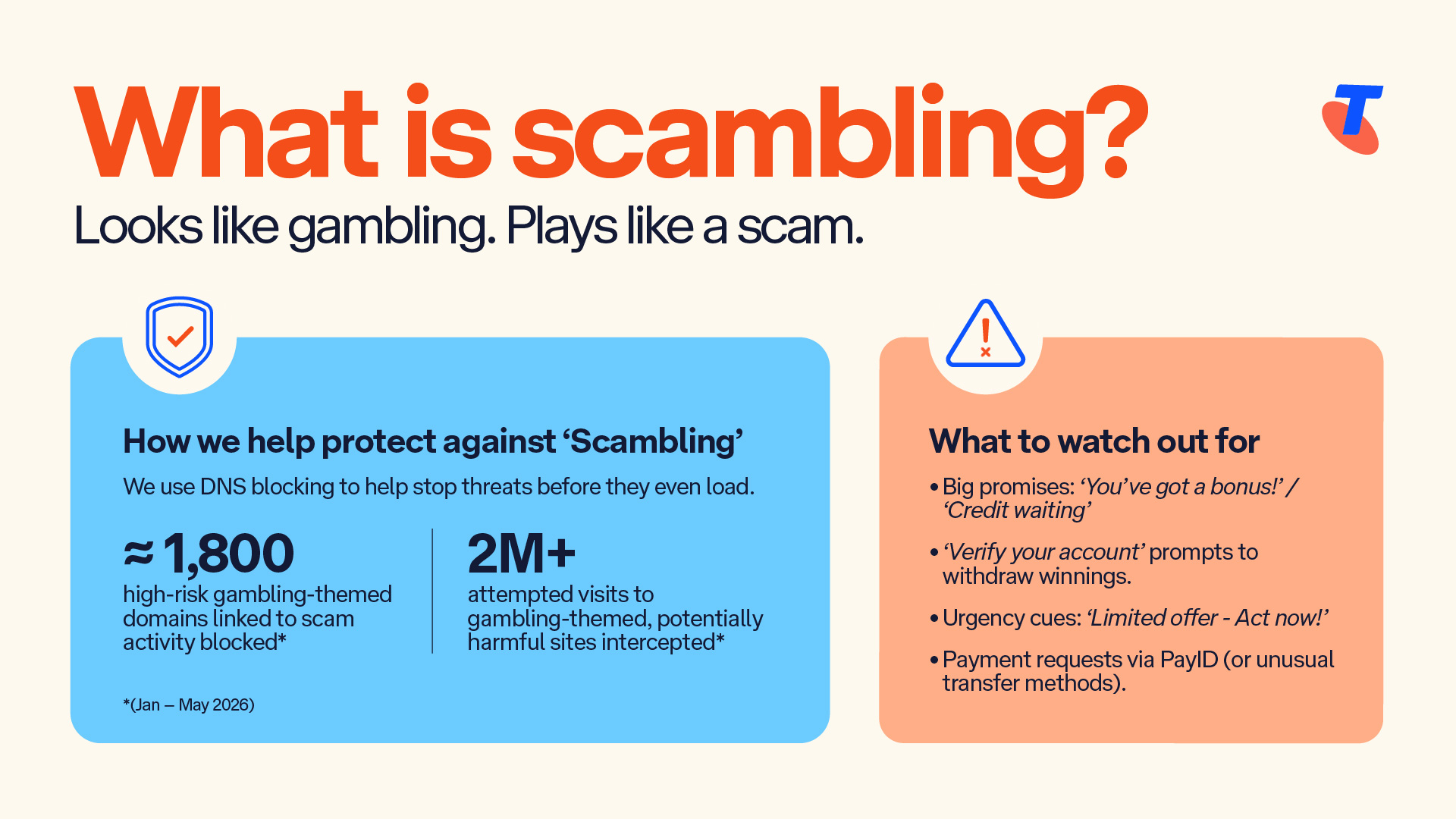
Scambling is where scammers lure potential victims to fake betting or casino websites, often via pop-ups or apps. The ‘winnings’ are never real, but the sites are optimised to steal money or personal information. It’s the most prevalent scam category we’re seeing right now, and it’s preying on unsuspecting Australians.
We’re blocking scam sites before they load
The safest scam site is the one you never reach.
In the first five months of 2026 alone (January to May), we blocked close to 1,800 high-risk gambling-themed domains linked to scam activity, preventing more than 2 million attempted visits by Australians to potentially harmful sites before any harm could occur.
Through our Cleaner Pipes program, we stop millions of scam calls, texts and emails before they get to you every month. We do the same online, blocking known scam websites before they load, whether you’re on your mobile or using your home internet.
If you click a blocked link, you won’t land on a scam site. Instead, you’ll see a clear warning page explaining what’s been stopped.
Why scammers target us at home, and at night
Through our Cleaner Pipes monitoring, we’re seeing clear patterns in when scambling messages (via SMS) are targeted to potential victims, and they’re anything but random.
As nights in become the norm to help keep costs down, more of our entertainment is shifting online: streaming, shopping, scrolling, and for some, placing the occasional bet*. Scammers exploit this behaviour. They disguise scams as just another bonus, bet or verification step, designed to fly under the radar in moments of downtime.
Nearly two-thirds (63%) of gambling-related scam messages are sent in the evening, between 6pm and midnight, with activity peaking between 7pm and 9pm.
There’s also a secondary spike overnight, between 2am and 4am, another window where attention is low and urgency tactics are potentially more effective.
According to the National Anti-Scam Centre’s Targeting Scams report, Australians reported $2.18 billion in losses in 2025. This included the takedown of “over 600 betting scam websites”.1
These scams don’t just cost money. They can cause real stress, harm and long-term financial impact, particularly for vulnerable Australians.
Added smart protection
At home, our Smart Modem 4 works as a first line of defence at the network level. If a scambling link loads on any device connected to your home internet, the modem can help block it before it reaches your screen. That includes your partner’s phone, the kids’ tablet, or anything else on the same connection. It updates automatically in the background, so the protection stays current without you needing to touch a setting.
These protections apply when customers are using Telstra’s DNS services. DNS, shorthand for Domain Name System, is like an online address book that helps your devices find websites when you type in a web address. Some devices or settings may route traffic through third-party DNS providers, which can affect how network-level blocking works.
How to spot scambling and protect yourself
Despite our best efforts, some scams can still slip through, so it’s important to stay alert.
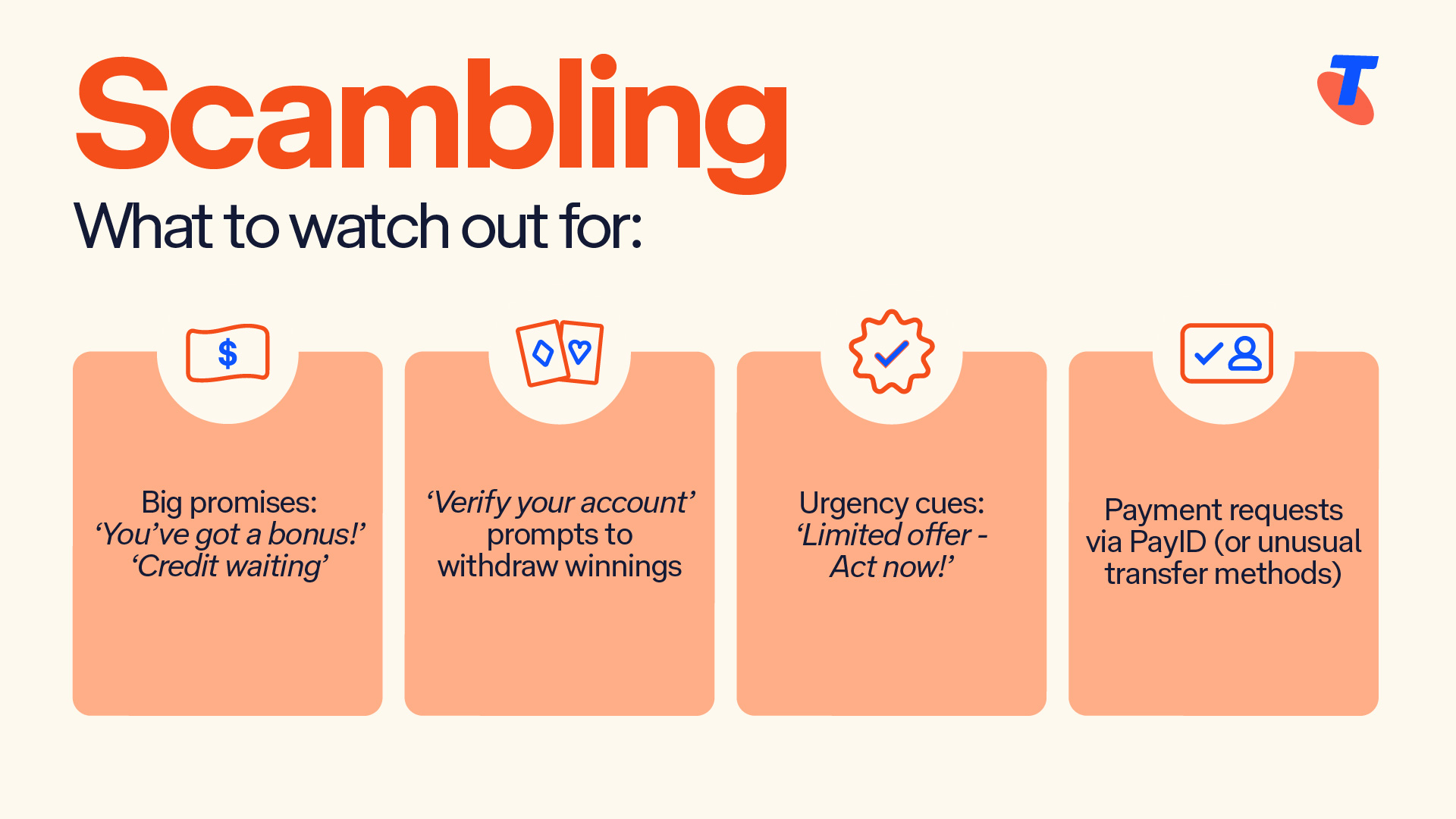
Scambling scams often use familiar triggers:
- promises like “you’ve got a bonus or credit waiting”
- prompts to “verify your account” to withdraw (fabricated) winnings
- urgency cues such as “limited time offer, act now”
- unusual payment requests through PayID or direct bank transfer
- URL shorteners (like tinyurl.com or bit.ly) that obscure the final landing domain and let links be swapped quickly.
A few simple habits make a difference:
- Don’t click through pop-ups or ads. Type the official web address yourself.
- Pause and assess. If something feels off, take a minute. Scammers rely on speed and urgency.
- Never trust winnings you didn’t earn. If it’s too good to be true, it probably is.
- If you suspect a phishing scam, report it to us.
Still not sure? Use the ACMA register to check if a gambling provider is licensed.
Help is available
If gambling or fraud has caused you harm or financial stress, free and confidential help is available.
National Gambling Helpline: 1800 858 858
National Debt Helpline: 1800 007 007
1 National Anti-Scam Centre, Targeting Scams: report of the National Anti-Scam Centre on scams data and activity 2025.
* Australian National University, Gambling Participation in Australia 2025: more than half (56.1%) of Australians who gamble now do so mainly online.
By Darren Pauli
-
-
From SMS to DMs: Our latest data shows scammers are moving potential victims from SMS and to encrypted messaging apps which often can’t be scanned or filtered for suspicious activity in the same way telco scam-blocking tech can detect and block scams. Here’s what Aussies need to know.
-
42% of Australians who own a mobile device admit to being less likely to answer calls out of concern about being scammed. We want to change that.