As cost-of-living pressures continue to bite, scammers are capitalising on financial vulnerability – shifting tactics, adopting new applications and using increasingly sophisticated, AI-enhanced messages to catch Australians off guard.
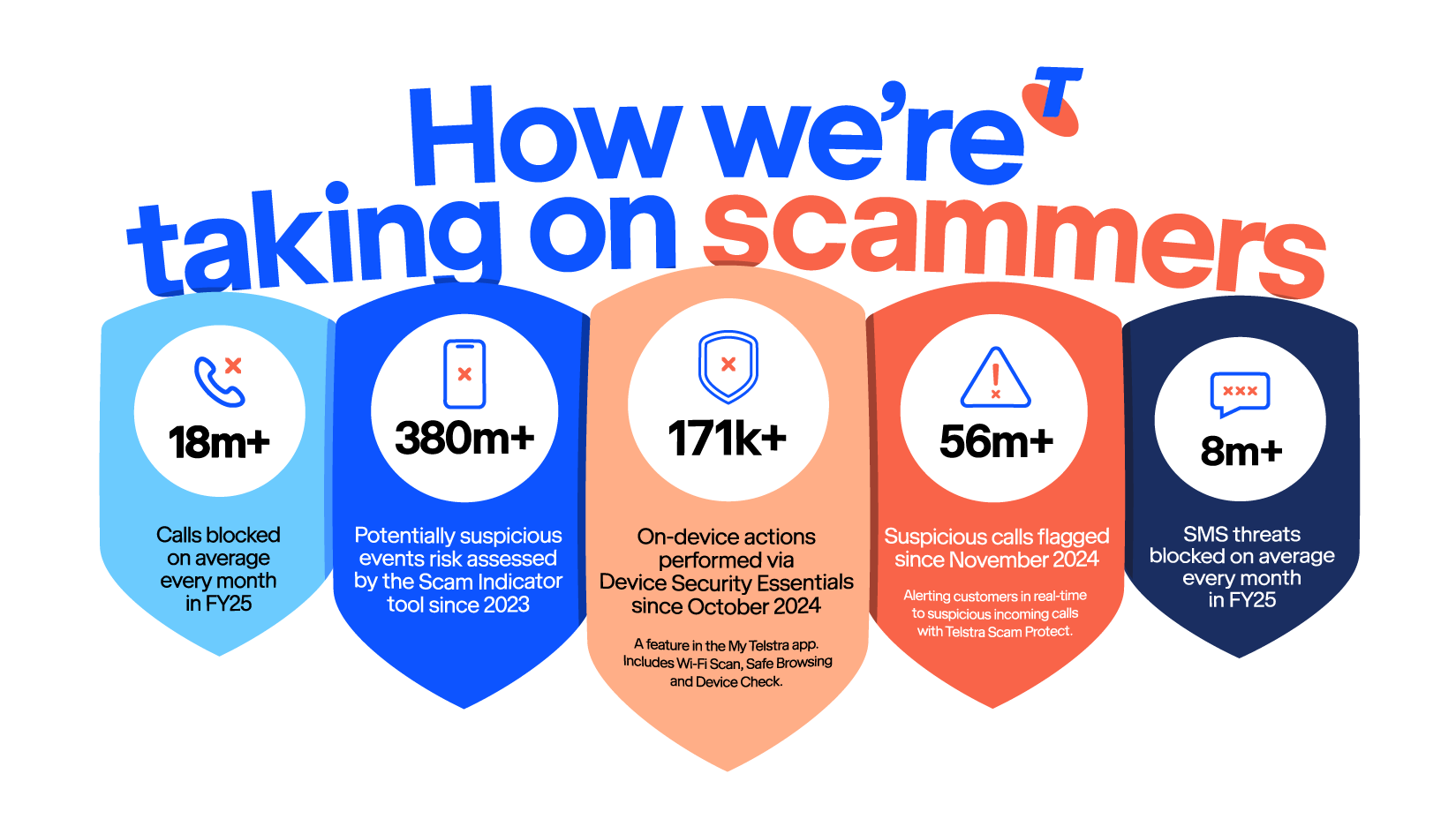
These trends are emerging from the millions of scam threats we block every month, giving us a real-time view of how the scam playbook is evolving. In FY25 alone, we blocked nearly double the number of suspicious phone calls compared to the year before – and that’s just one of the ways we’re helping to keep Australians safer every day.
There is good news: according to the National Anti-Scam Centre’s Targeting Scams report, scam losses dropped by more than 25% year on year (2024 vs 2023), with combined reports also down over 17%. But our customers are still on high alert, with recent Telstra data showing a 13%* year-on-year increase in reports of potentially unwanted or suspicious contact via its reporting channels.
And while Australians’ ‘scam sixth sense’ is getting stronger and reversing a trend, scammers are getting more cunning — and staying one step ahead means we need to do the same.
From fake jobs to instant messaging: Inside the evolving scam playbook
Through our Cleaner Pipes program, we block an average of over 8 million scam SMS a month. It’s become so effective that scammers are constantly adapting – including finding ways to bypass SMS defences and deliver more persuasive messages.
One tactic is pivoting potential victims to legitimate but more difficult to trace communication methods including over-the-top (OTT) messaging services such as WhatsApp and device manufacturer’s own messaging apps. These apps use the internet to send messages and calls with telcos having limited visibility and control over such communication. Many also use end-to-end encryption, meaning messages can’t be scanned or filtered for suspicious activity in the same way we use our own scam blocking technology to detect and block scams.
And as our ability to spot scammers’ signature ‘MO’ has become more acute, they’re experimenting with a shift away from high volume scams designed to trick potential suspects into clicking dodgy links or making transactions under time pressure.
Instead, some scammers are adopting a “low and slow” approach: fewer messages, but more convincing ones, designed to build trust and extract valuable information over time enhanced by basic AI tools to craft messages that feel more local, personal and authentic – giving them a more conversational and innocuous tone..
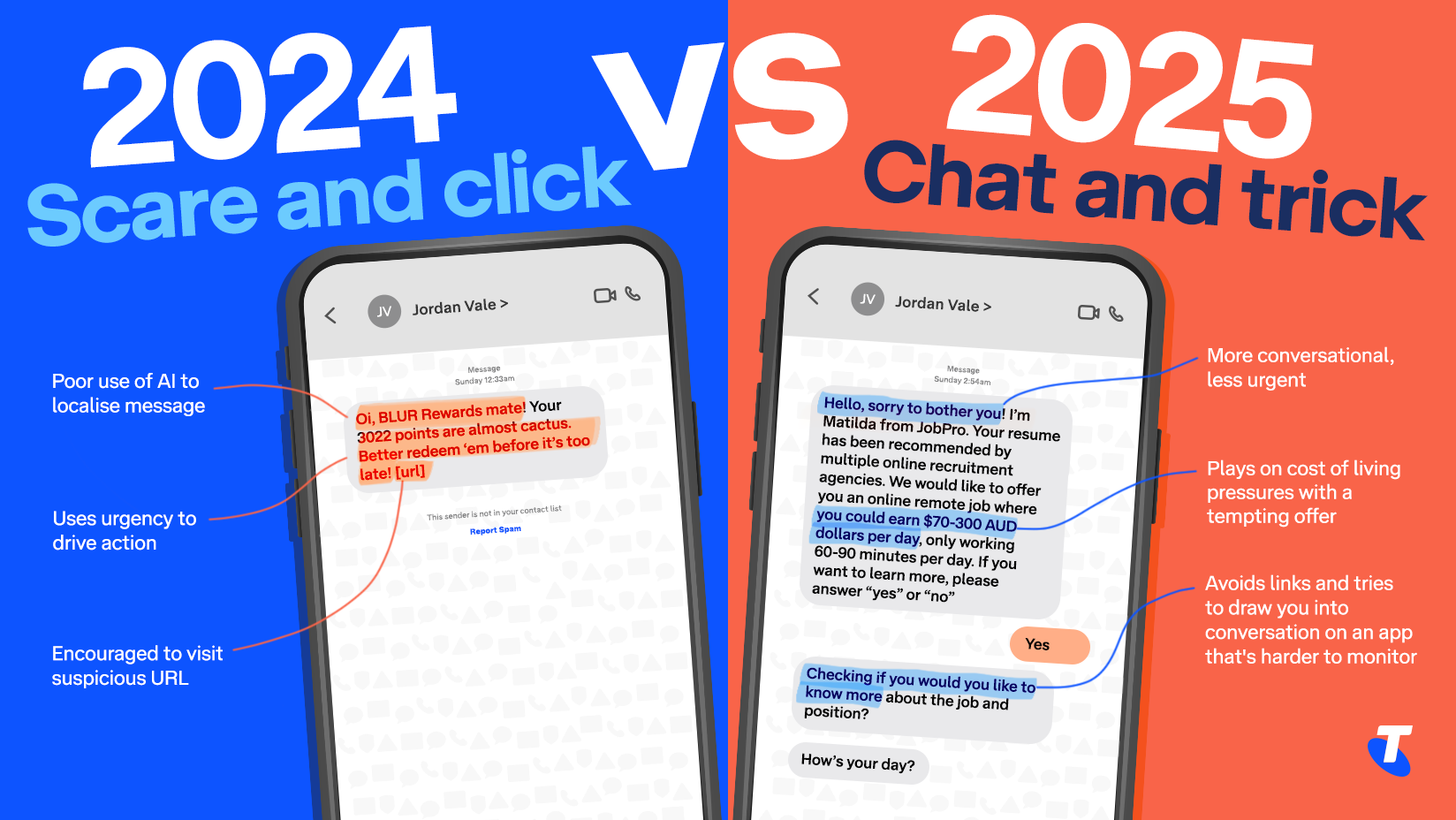
One of the most concerning trends is the rise of recruitment lure scams. These scams prey on people looking for extra income, offering fake job opportunities that seem legitimate. But instead of asking for money, scammers request personal information – like identification documents – that can be used for identity theft or sold on the dark web.
These scams are more conversational and persistent, often unfolding over several messages. They’re designed to feel native to the platform and emotionally relevant to the recipient – making them harder to ignore and easier to fall for.
The rise of AI-enhanced scams
As AI becomes more accessible, scammers are using it to scale their operations and refine their tactics. We’re seeing early signs of a shift toward highly targeted scams—where messages are tailored to individuals based on publicly available data or previous interactions.
For instance, there has been an increase in fake celebrity scams using AI-generated deepfakes. These scams often involve public figures, such as politicians or celebrities, to lure victims into investment scams. As AI continues to evolve, including its ability to mimic voices, it’s more important than ever to stay alert.
What You Can Do: Trust, But Authenticate
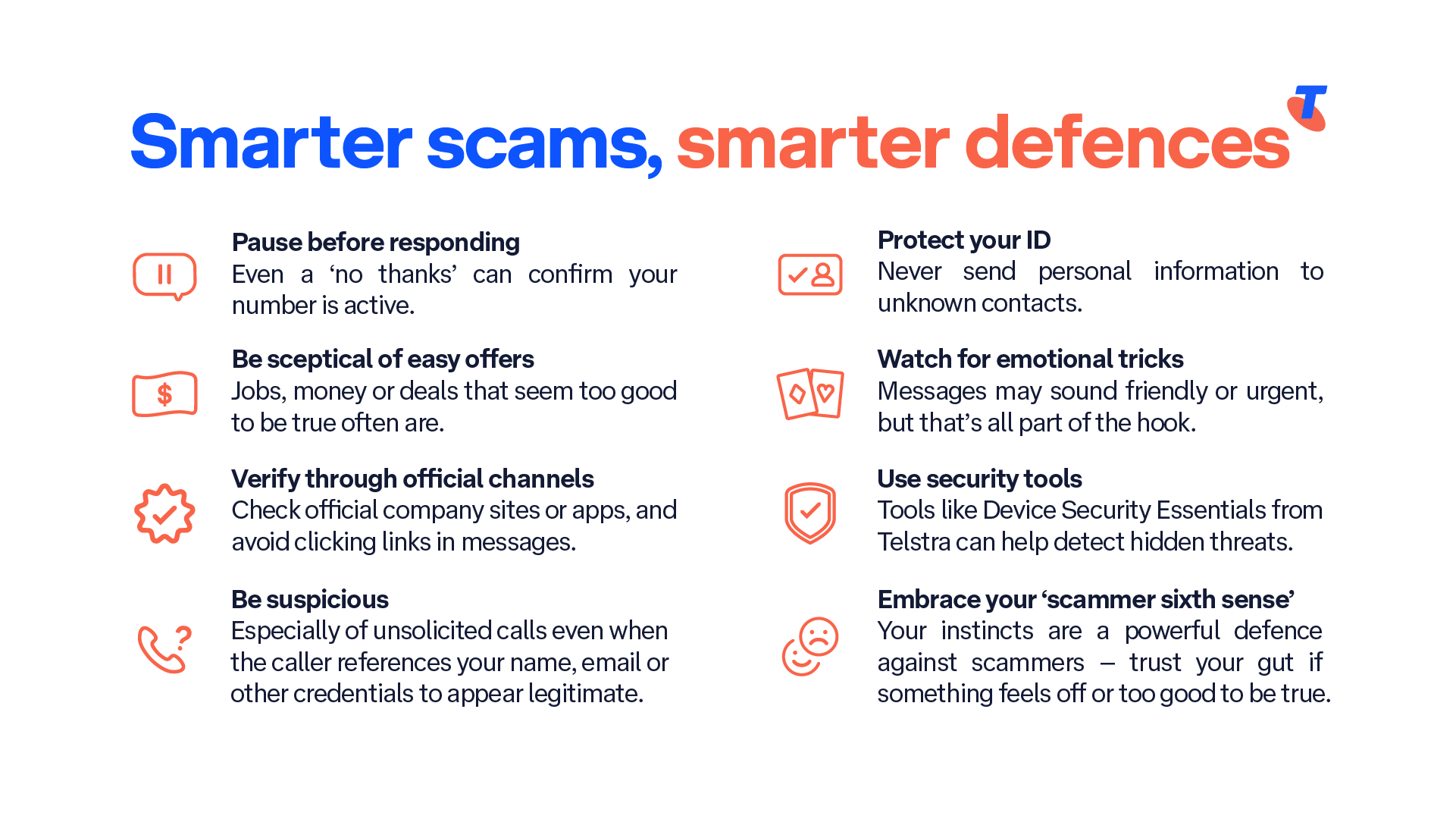
In this new era of scams, while instinct and trusting your gut counts for a lot, our “scammer sixth sense” isn’t aways enough. As messages become more polished and convincing, Australians need to adopt a “trust but authenticate” mindset.
How we’re adapting to help keep Australians safe
Scammers are evolving—but so are we. With smarter tools, sharper instincts, and a national commitment to staying informed, Australians are better equipped than ever to stay safe. At Telstra, we’re continuing to invest in technologies that protect our customers and help keep the digital world a safer place for everyone.
To learn more about how we’re helping to keep Australians safe, visit our Cyber Security Hub and if you suspect a misuse of service, including suspicious emails or SMS and phishing or telephone scams, report it here.
*13.5% increase in suspected scam reports based on period of 1st January 2024 – 1st June 2024, compared to 1st January 2025 – 1st June 2025. Data excludes 7226 reports