How Triple Zero works: the ecosystem behind a call for help
Behind every call is a carefully coordinated system, with clear roles and responsibilities. Telstra plays a critical part in that system, but we’re one link in a longer chain that ends with police, fire or ambulance arriving to help.
When someone dials Triple Zero (000), they're often having one of the worst days of their life. In that moment, people just want to know that help is on the way.
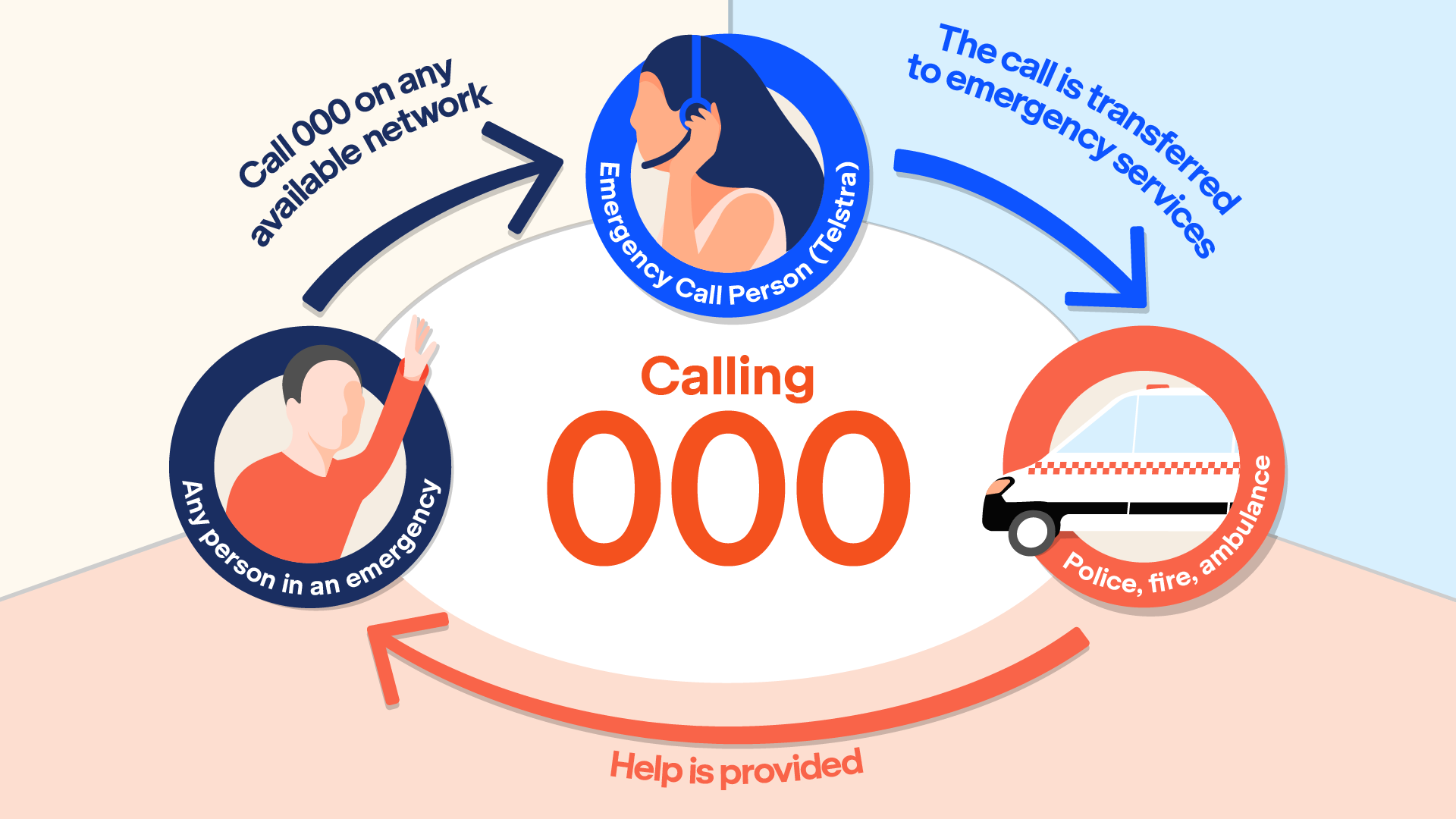
Calling Triple Zero may feel like one simple step, but getting help relies on a carefully coordinated relay working behind the scenes. The baton starts with the caller's device and the telecommunications network it is connected to, is then handed to an emergency call operator (also known as the Emergency Call Person or ECP) which is operated by Telstra, and is then passed to the appropriate emergency service in the relevant State or Territory so they can take over and get the right help to the right place.
What happens when you call 000?
You can reach Triple Zero from a landline or a mobile phone. Calls from a mobile phone can be affected by factors like network coverage, the device's settings and how it connects to available networks.
- You call Triple Zero. The call is recognised and routed as an emergency call. From a landline, the call is carried over the fixed network. From a mobile, your phone connects to an available mobile network (your provider first, or if needed, another provider's network via what's referred to as 'emergency camp-on' if your provider network is not available). The call progresses to the Telstra network if the caller was not on Telstra's own network when the call is established.
- Telstra answers as the Emergency Call Person (ECP). A Recorded Voice Announcement (RVA), an automated message, says "You have dialled emergency Triple Zero, your call is being connected" before a trained operator asks: "Emergency. Police, Fire or Ambulance?" and confirms key details, including location where possible.
- The call is 'warm-transferred' to the right emergency service organisation. The operator stays on the line until the emergency service answers, to confirm there is two-way communication between the caller and the emergency service organisation and to ensure critical information isn't lost.
- The emergency service takes over and sends help. From there, State and Territory emergency services coordinate the response and send police, fire or ambulance resources.
Like any relay, the outcome depends on how well each handover works. If a handover is disrupted by a dropped signal, a delayed connection or unclear location information, the response can slow.
Triple Zero works best when each link in the chain does its job, allowing the call to move smoothly from the person asking for help to the people who can provide it.
What are Australia's three emergency numbers?
Australia's emergency call service has three numbers:
- 000 — the primary emergency number.
- 112 — a globally defined emergency number that can be dialled from all mobile phones to contact emergency services in any country.
- 106 — a teletypewriter emergency relay for people who have hearing or speech impairment. Rather than being answered by Telstra, communications to this number are answered by the 106 emergency call operator (run by Concentrix).
Good to know: apps like WhatsApp or Messenger can't place calls to 000 in Australia, so you need to use your phone's dial pad and be connected to a mobile network.
How your phone actually connects to 000
When you make a call, especially an emergency call, a few things need to go right before your voice reaches the other end of the line. It all starts with the "uphill" leg of the journey: your phone connecting to a network.
In most cases, your device will connect to your mobile provider's network. But if that network isn't available in the area, the device will try to make an emergency call by connecting through another carrier's network, if available. This is referred to as "emergency camp on" and while it happens automatically, it can take a short time (typically less than 60 seconds) for the device to establish a connection.
If your phone can't connect to a mobile network, it will look for other options, like another network or Wi-Fi Calling, if it's switched on. If none of these are available, the call will not go through.
All carriers have clear obligations to maintain the networks and facilities that carry emergency calls and to ensure those calls can be delivered to the ECP. And almost all the time, the calls connect. But even the best network isn't perfect and faults, outages and other interruptions can happen.
The device being used also plays a role. Not all devices are the same, and factors such as handset age, software settings and network compatibility can influence how emergency calls are made. This is why keeping software up to date is important for reliable access to Triple Zero.
What is Telstra's role as the Emergency Call Person?
In Australia, Telstra is contracted to be the ECP for the 000 and 112 emergency numbers. This means that when someone dials Triple Zero, a Telstra emergency call operator answers the call first, confirms which emergency service is needed and in some instances the location of the emergency, and then connects the caller to the required service.
We have performed this role since 1961. As the first point of contact in Australia's emergency call system, we're focused on speed, accuracy and reliability.
We have three national emergency call centres located in Melbourne, Sydney and Adelaide, each staffed by highly trained emergency call specialists who are calm under pressure and focused on connecting the call quickly to the emergency services.
These team members answer around 11.7 million calls to Triple Zero each year, or roughly 32,000 calls a day. This does not include misdials, which make up a significant proportion of attempted calls to 000. Many of these misdials drop off after the caller hears the initial RVA, which is an automated message at the start of the call confirming they've reached emergency services.
On average, a Telstra emergency call specialist spends around 46 seconds confirming details and transferring the caller to the correct emergency service.
Connecting you to the right emergency service and rolling out help
Once the right emergency service is confirmed, Telstra 'warm transfers' the call to the relevant organisation.
A 'warm transfer' means Telstra stays on the line until the emergency service operator (fire, police or ambulance) answers and the call is successfully handed over with two-way communication between the caller and the emergency service organisation, so critical information isn't lost.
From there, State and Territory-run emergency services take over, asking further questions if needed and mobilising responders.
What helps your Triple Zero call succeed
- Stay on the line while your call is being connected. Emergency calls may take a short time to be routed through the network and connected to the right emergency service. Hanging up and redialling can interrupt that process.
- Be ready to confirm your location verbally. Although information about your location can be automatically sent by the mobile network to the emergency service operator, it isn't always precise. Being ready to share your address, nearest landmark or travel direction helps emergency services locate you quickly.
- Keep your device software up to date. Older software can affect how calls connect.
- Enable features that support calling over data where available. Services like Wi-Fi Calling allow calls, including emergency calls, to be made over a fixed internet connection if there is limited or no mobile signal. For Triple Zero calls, your phone will always try to use an available mobile network first.
- Follow the emergency call-taker's instructions. Questions and instructions are part of ensuring the call is routed correctly and the right response is dispatched. They don't delay help and can assist while emergency services are on the way.
And remember, never test call Triple Zero. Test calls are treated as real calls and divert resources away from genuine emergencies. A single test call also can't reflect the many different situations in which you may need to call Triple Zero and can create a false sense of security.
Oversight: the ACMA and the Triple Zero Custodian
- The Australian Communications and Media Authority (ACMA) oversees compliance with emergency call obligations and can investigate, enforce and penalise failures.
- The Triple Zero Custodian focuses on improving monitoring, coordination, resilience and preparedness across telcos, emergency services and government.
Together, this oversight exists to ensure Triple Zero continues to work when Australians need it most.