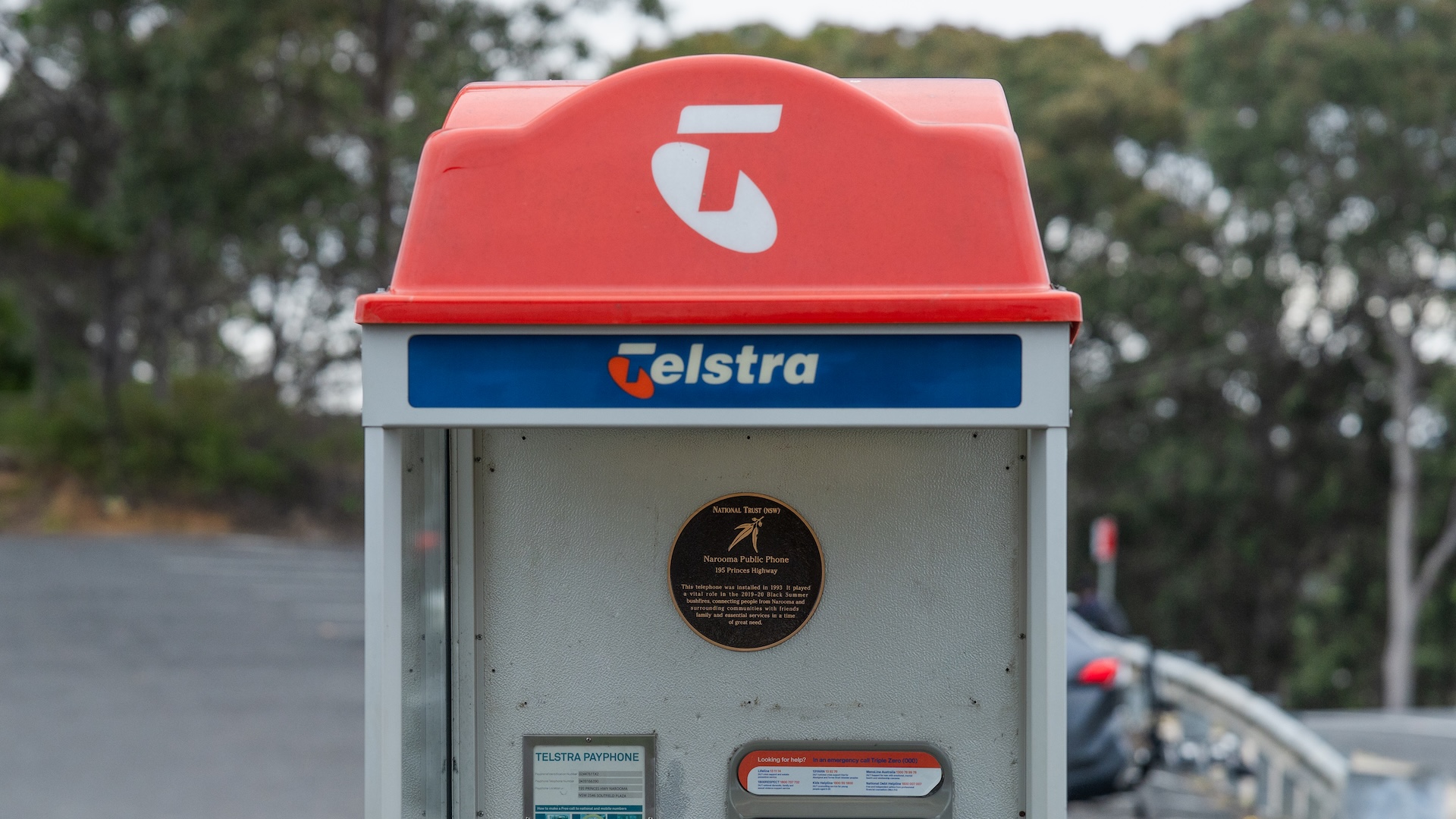
Five years after we made standard national and mobile calls free from our payphones, Australians have made close to 120 million free calls. Now a payphone in Narooma has earned a place on the National Trust (NSW) Register for the role it played during the Black Summer bushfires.
Scaling device access for young Australians is everyone’s role
We’re extending our existing WorkVentures partnership, with a grant of just under $3 million to scale the initiative from an early-stage Telstra Foundation funded initiative into nationally coordinated digital inclusion infrastructure.
Jackie Coates · 05 June 2026 · 4 minute read
Today, leaders from business, government and the not-for-profit sector came together to discuss the draft Tech Reuse for Good Charter. The Charter is a tool to engage governments and organisations to sign up and work together to tackle device poverty led by Business Council of Australia, Good Things Australia and WorkVentures.
Even in our hyper connected world, access remains a fundamental barrier for many Australians and is still not equal. We know organisations across the country refresh millions of devices every year, while a significant number of young people still lack access to a suitable device for learning, limiting their ability to fully participate in education and digital opportunities. That’s why Telstra Foundation is supporting the development of the Charter and the National Device Bank to addresses this gap.
We’re announcing that we’re extending our existing WorkVentures partnership, with a grant of just under $3 million to scale the initiative from an early-stage Telstra Foundation funded initiative into nationally coordinated digital inclusion infrastructure.
At the centre of this proposal is a clear system insight:
Australia does not lack devices - it lacks the coordination, refurbishment and distribution infrastructure required to convert existing supply into equitable access.
What a lack of device means for young people
For many young people, not having a device of their own means more than inconvenience, it means missed opportunities.
Through our work with partners across the country, we see it every day:
Students unable to complete homework outside school hours
Young people locked out of job opportunities
Families forced to make impossible trade-offs
As Bailey our Youth Advisory Council alumni shared:
“All young people deserve to have access to reliable digital technologies and communication as it is an essential way we live today. Our society heavily relies on these digital technologies and communication platforms, so why don’t all young people have reliable access?”
Building on what we know works
That’s why this new investment is focused on scaling a proven model.
Through the National Device Bank, and in partnership with WorkVentures, thousands of high-quality, pre-loved devices have already been redirected to young people who need them most, supporting learning, connection and participation.
It’s an approach that delivers for those in need on multiple fronts:
Expands access to essential technology
Reduces e-waste through repurposing
Targets equity by reaching young people facing the greatest barriers
Why this moment matters
Demand for devices continues to outpace supply. Telstra Foundation’s Australian Youth Digital Index shows the share of young people without access to a laptop or desktop at home has risen from 19 per cent in 2024 to 23 per cent in 2025. That’s equivalent to 1.42 million young people.
At the same time, more organisations are recognising the value of repurposing technology as part of a circular economy by extending the life of technology and reducing e-waste.
How this funding will help the program
This new funding commitment will help accelerate progress by:
Getting more devices into circulation, faster
Reaching young people in underserved communities
Strengthening the end-to-end ecosystem, from device donation through to distribution
Embedding more sustainable, circular approaches to technology
It’s a practical response to a complex challenge, and one that is ready to scale.
Where we go from here
Closing the digital divide will take coordinated effort across sectors. But today showed what’s possible when that effort aligns.
With around 10 million computers and tablets, and 6.5 million mobile phones expected to be refreshed across the corporate and public sectors, there is a clear opportunity to redirect these devices to Australians who need them most.
As Caroline McDaid, CEO of WorkVentures shared, “We’re creating a new piece of social infrastructure,” she says. “Our goal is that no one in this country will be without access to a device because they can’t afford one. It’s ambitious, but it’s absolutely essential.”
By building on proven partnerships and investing in what works, we’re helping ensure more young people have the tools they need, not just to get online, but to learn, connect and thrive.
By Jackie Coates
-
-
In an emergency, getting connected quickly is what matters most. Even when you're outside our coverage, a 000 call can still get through, as long as another mobile network is available.
-
Tasmania faces some of the lowest digital inclusion levels in the country, and together with RDA Tasmania, we’re taking action.