
What do Telstra Best of Business Awards Winners have in common? Go Behind the Panel to discover the judges’ views on five key traits that help businesses thrive.
How strategic decision-making helped Women on the Tools grow with purpose
Learn how Women on the Tools scaled from a side hustle to a sustainable business. Explore tips on how data-driven decisions, and careful risk management help drive business growth.
26 February 2026 · 6 minute read
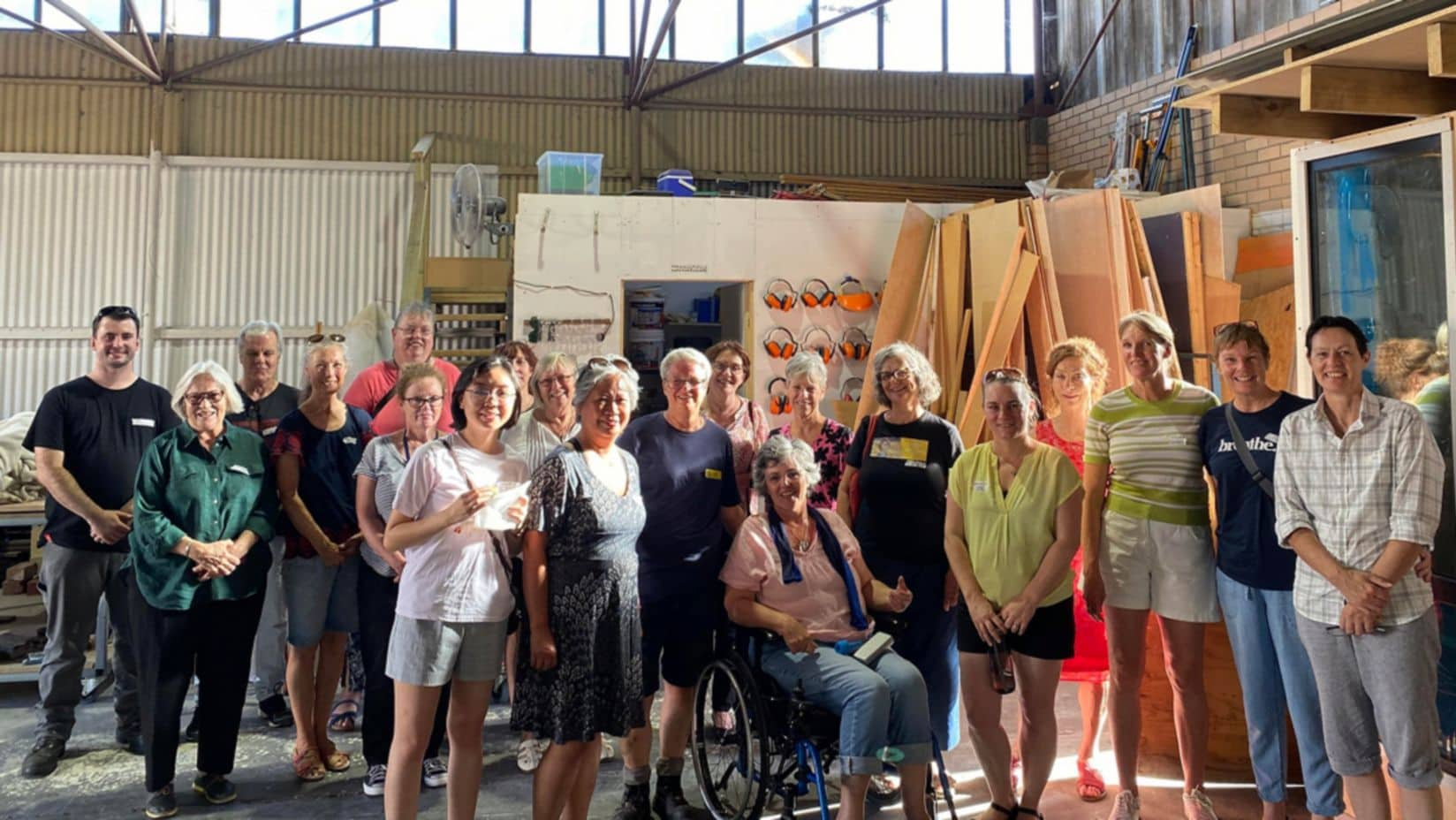
Behind the Business with Women on the Tools
Women on the Tools offers hands-on workshops to help women build confidence using tools. Founded by carpenter and welder Janet Carter (JC), the business began as a side project. It’s grown into a full-time operation with a thriving membership community.
Recognising the impact of JC and her team, Women on the Tools was named a 2025 Telstra Best of Business Awards Western Australian Accelerating Women State Finalist.
As demand grew, JC knew it was critical to forecast demand well and protect capacity.
Factors key to the growth and success of Women on the Tools are:
- strategic decision-making based on data
- expansion shaped by customer needs and feedback
- smart pricing strategies
- careful risk management.
JC’s story reveals how a practical approach to these areas can help business owners aiming for sustainable and purpose-led business growth.
A business that began as a response
Women on the Tools started life as a response to a pattern rather than a formal business growth strategy. With over 30 years’ experience on the tools, JC noticed a gap between the push to get women into trades and the reality of retaining them.
She suspected the issue wasn’t lack of interest or ability, but access. Many women didn’t have the opportunity to build basic tool confidence before entering formal training environments.
Tapping into an underserved market
JC’s response was practical: begin earlier, widen access and build confidence before formal training begins.
Her initial workshops tested that idea. They were short, accessible sessions in small groups, on weekends. At this stage, Women on the Tools was a side hustle: exploratory, manageable and low risk.
Demand quickly grew as women actively searched for opportunities to learn basic tool skills.
The challenges of business growth
As demand for her workshops grew, so did the challenges of running the business. That momentum also exposed clear constraints. JC could only run one small course at a time, and on limited days. Course numbers were also capped to preserve learning quality.
Growth was welcome but couldn’t come at the expense of customer experience. It was also clear demand alone couldn’t sustain the business.
Strategic decisions were needed to support the next phase of growth.
Discover how technology can help drive business growth.
Designing growth for the future
JC approached growth decisions carefully. She tracked attendance patterns and pricing points closely. This gave her a clear view of what each course needed to be viable.
Group size settled at six participants. This was large enough to cover costs, but small enough to preserve hands-on learning. Pricing was adjusted gradually to meet demand without affecting attendance.
Data-driven decision-making
Importantly, JC didn’t make decisions on instinct alone. Data played a major part in helping to further inform strategy. She had a clear picture of where certainty ended and risk began.
That visibility shaped how quickly and how far Women on the Tools could expand.
A calculated risk that unlocked the next stage
A significant milestone came when the unit next door to JC’s workshop became available.
By this point, participants were looking at the next stages of their development. Many wanted to keep practicing but lacked space at home, or the resources to invest in tools. Access, rather than interest, had become the limiting factor.
Leasing the additional space offered a way to expand. But it also introduced new pressure. Fixed costs would increase immediately, but new memberships would take time to gain traction.
Strategic pricing decisions
JC modelled attendance thresholds and tested cash flow assumptions to understand how the business could sustain the added cost.
I wanted to be sure that I was managing the risk effectively.
And that if it went the wrong way, I could put it back on track.
JC – Founder, Women on the Tools
Part of this new approach was to introduce a new membership model. This became both a learning pathway and a stable income stream. One-off participants became an ongoing community.
How customer feedback shaped future direction
On the face of it, members were attending workshops. But they were also actively helping to shape the direction of the business.
New courses were introduced in response to requests for new skills and deeper learning. These were often delivered by experienced tradies.
Growth followed clear customer feedback, helping to keep the business focused and relevant as it expanded.
Using technology to stay lean and focused
As the business matured, new systems became essential. Online booking and payment platforms help streamline administration. Shared calendars and collaboration tools support the small team so they can work remotely as well as at the workshop.
AI tools assist with research and basic marketing tasks. This helps reduce time spent on back-office work.
Without these systems, I’d be spending hours on admin.
Technology lets me focus on the work that actually matters.
JC – Founder, Women on the Tools
Technology is a major factor in supporting how the business is run. The right tools help JC and her team deliver a positive customer experience as demand increases.
Learn how strong systems help small businesses shine.
A new business structure for sustainable growth
As Women on the Tools continued to grow, JC transitioned from a sole trader to a proprietary limited company. This move reflected the scale and responsibility of the operation. It also provided clearer structure and greater resilience.
Each step JC took followed the same principle: formalise what’s working before moving on.
Playing the long game with purpose
JC’s long-term goals remain measured. She sees Women on the Tools as part of a broader effort to improve people’s confidence and capability over time.
This is a long game. Real change doesn’t happen overnight;
it happens when you build things that last.
JC – Founder, Women on the Tools
Her future plans include mentoring pathways and programs to support women and girls earlier in their learning journey. JC is also using evidence-based insights to help guide tool design for women.
Lessons for business owners navigating growth
Women on the Tools shows that sustainable business growth isn’t about trying to do everything all at once. It means making the right decisions you can support over time.
Consider the following tips for your own business growth strategy:
- Let demand inform decisions, not dictate them.
- Use data to clarify risk and guide timing.
- Design capacity before expanding it.
- Use technology to reduce friction, not add complexity.
Growth often comes with challenges as well as opportunities. But when business decision-making is grounded in precision and purpose, it becomes far more manageable.
Learn how successful businesses live their purpose.
Stories Behind the Awards
Celebrating the people, purpose and bold moves behind Australia’s best of business.
Explore more on this topic
Telstra Best of Business Awards
Nominate an extraordinary business
Whether it's your own business or one you admire, now's your chance to celebrate the most extraordinary of Australian small and medium-sized businesses.
Other articles you might like
-
-
Take your small business to the next level. Explore our guide with insights from Telstra Best of Business Awards Judges to help you reflect and refocus your business plan.
-
Discover how Vantari VR is revolutionising medical training with cutting-edge VR technology, enabling virtual training and education for healthcare professionals.