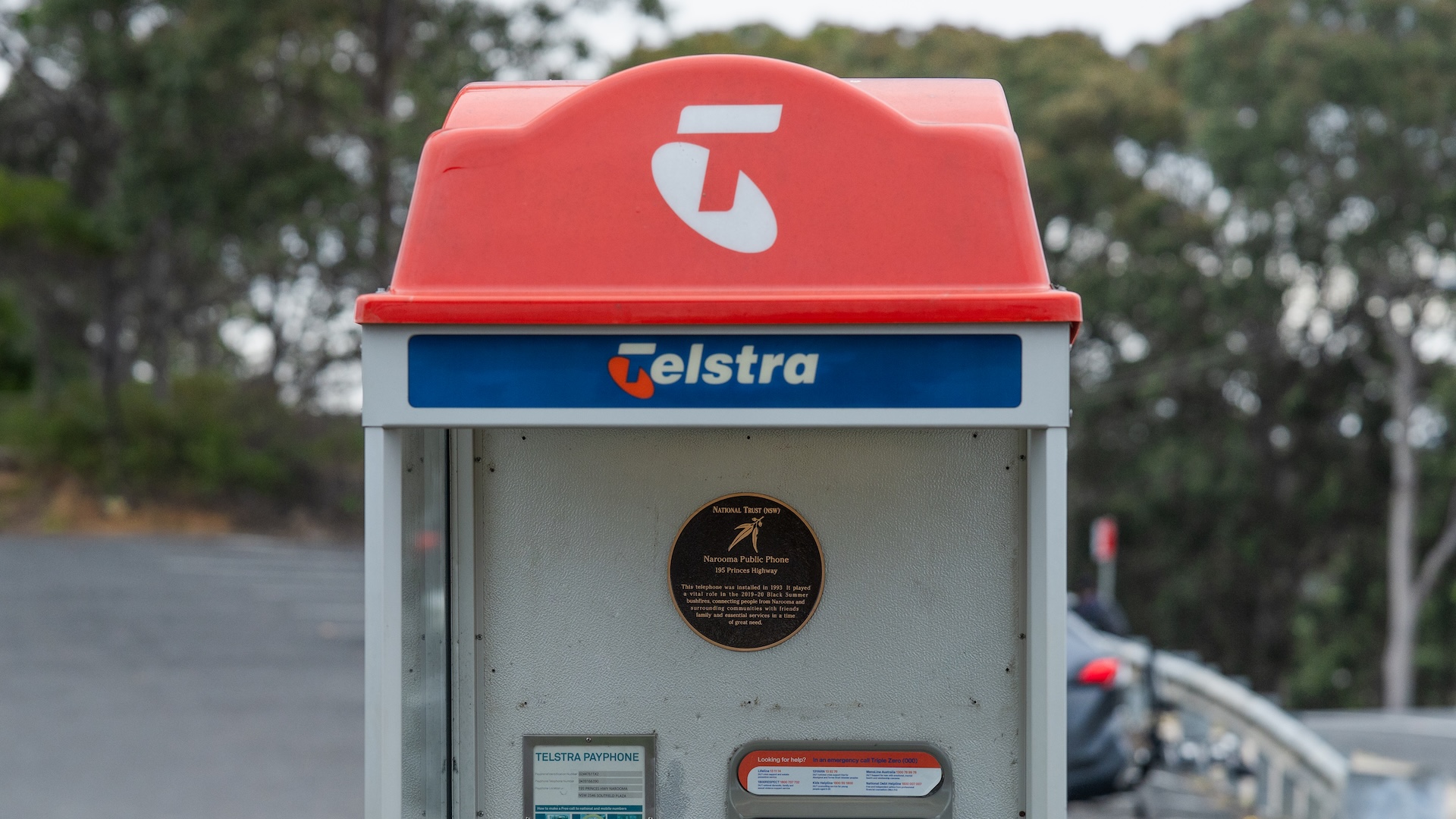
Five years after we made standard national and mobile calls free from our payphones, Australians have made close to 120 million free calls. Now a payphone in Narooma has earned a place on the National Trust (NSW) Register for the role it played during the Black Summer bushfires.
Why we built a synth from reclaimed e-waste with The Avalanches
We’re launching a new initiative, Second Life Sounds, to spotlight the issue of e‑waste and the actions we’re taking to reduce environmental impact.
Tom Penny · 24 February 2026 · 5 minute read
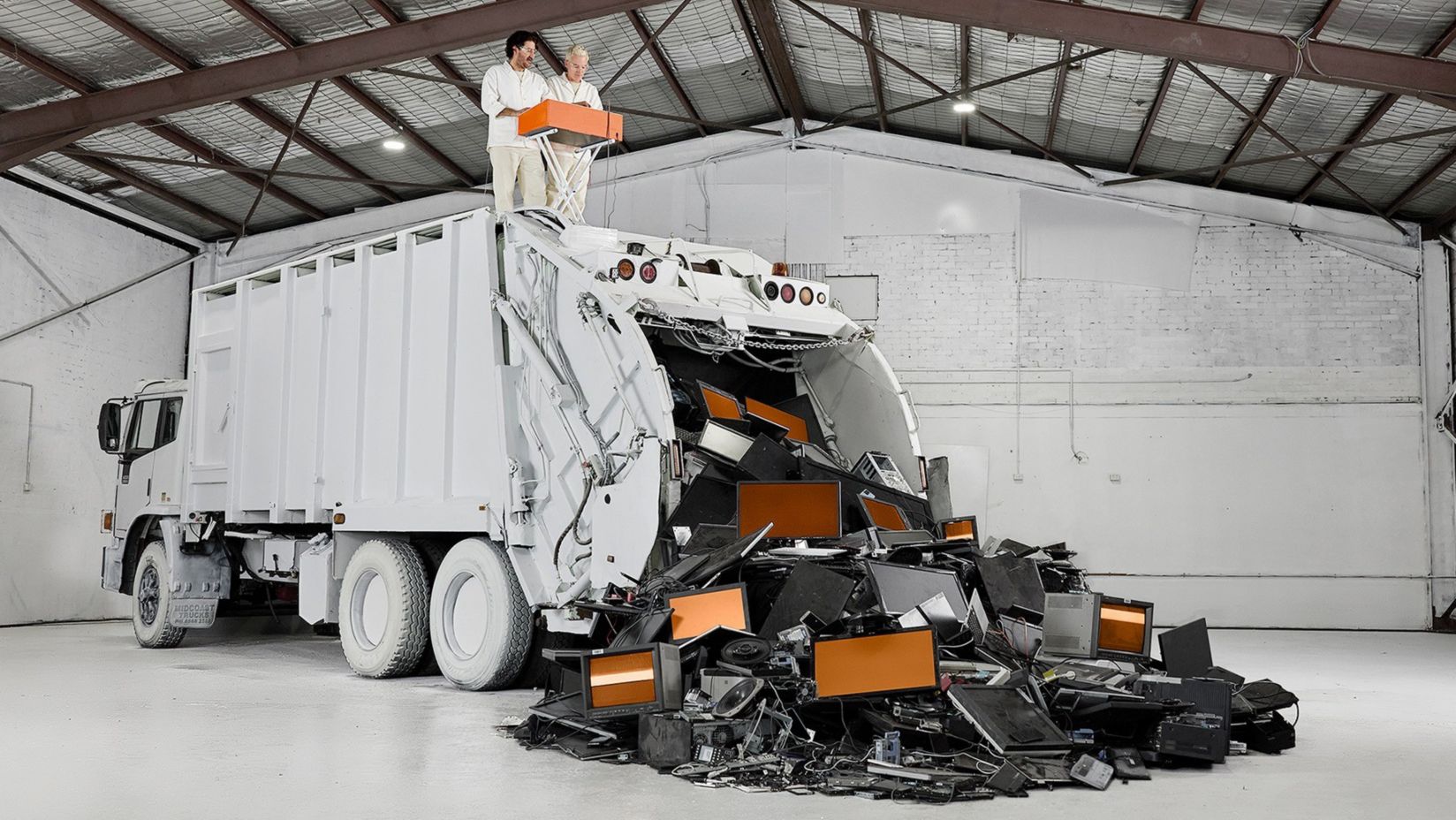
Australia is facing a mounting e-waste problem. Our e-waste production is already triple the global average and projections indicate that by 2030, we'll be producing 657,000 tonnes of e-waste every year1. That's roughly the weight of 12 Sydney Harbour Bridges2 or 19,000 Melbourne trams3.
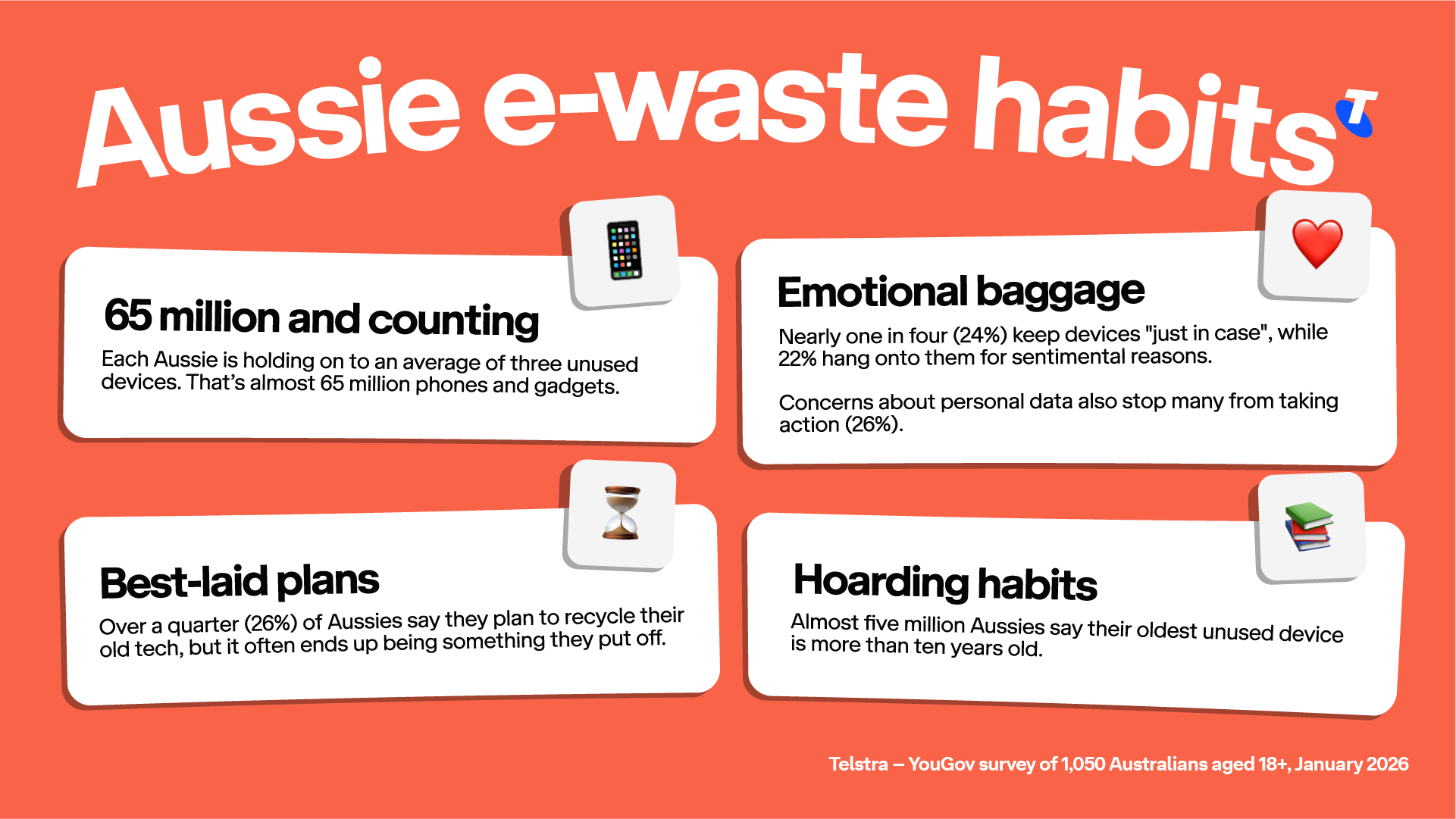
While those numbers are vast, the problem is deeply personal. Australians hold onto an average of three unused devices each - around 65 million devices sitting idle in homes across the country4.
So, to inspire the nation to give their old devices a second life, we've partnered with ARIA-award winning electronic duo The Avalanches, globally renowned for their sample-driven sound, repurposing fragments of vintage records, tapes and found audio into innovative, intricately layered compositions that have defined their distinctive place in contemporary electronic music and pop culture.
The Avalanches have helped us create a brand-new, fully functioning synthesiser, made up of over 80% repurposed components from e-waste, such as mobile phones, gaming consoles and old electronic cables.
"We wanted to show that e-waste can be repurposed into something that people can relate to universally. Through music, we have tried to demonstrate the amazing link between sustainability and creativity."
Robbie Chater, The Avalanches
The initiative, Second Life Sounds, marks a new ambition for Telstra, all centred around one goal - to re-use, recycle, repair, or donate one smart device for every two devices sold, by 2030 and symbolises the enormous, untapped potential that e-waste has to be repurposed for different uses.
What is e-waste and why is it a problem you say?
E-waste, or electronic waste, is basically all the old electronics we don't use anymore, like broken phones, tablets, modems and chargers. Instead of tossing them in the trash, they need special recycling because they're full of stuff that can harm the environment, but they also contain valuable materials we can reuse.
Addressing the 20 kg elephant in the room
According to the Australian Government's Department of Climate Change, Energy, the Environment and Water (DCCEEW), each Australian produces around 20 kg of e-waste every year – compared with the global average of just 7 kg per person, the scale of Australia's e-waste problem is hard to ignore.
Sadly, much of our e-waste is sitting forgotten in drawers, cupboards or garages, or worse, thrown away incorrectly. In many homes, these devices haven't just been set aside recently: 4.9 million Australians say their oldest unused device is more than 10 years old5.
Part of the reason e-waste builds up isn't practical - it's human. Nearly three in ten Australians (29%) keep unused electronics "just in case", while a similar number (27%) hang onto devices for sentimental reasons or the memories attached to them, meaning old tech often lingers long after it has stopped being useful6.
Enough stats, more synth: anatomy of the e-waste synth
Popularised in the bold sounds of the '80s, synths are the ultimate shape-shifters of music – electronic instruments that generate their own audio signals to create iconic tones, fuelling everything from retro grooves to modern beats.
How Telstra is managing e-waste
Telstra has a long track record supporting customers and the community in doing better by the environment, including taking steps to progress a circular economy. In FY25 we exceeded our goals by reusing or recycling over 769,000 mobile phones, modems and other devices* and diverted 94% of our network waste to recycling**.
This year, we're upping our game with our new 2030 target (outlined above) designed to keep more devices and materials in use for longer. As part of this, we're collaborating with our recycling partners to expand our recycling services, meaning we are now recycling a wider variety of devices through our Telstra stores. See list below for more details.
We are also creating a more connected, customer-friendly program that elevates our donation, repair and refurbishment services into a simple and easy to use format for our customers.
Where can I check out the e-waste synth?
Telstra and The Avalanches have collaborated on a one-of-a-kind, limited edition e-waste synth to help raise awareness about e-waste in Australia. The synth will be on show in the window of our Melbourne Discovery Store (Corner of Bourke and Swanston St) through March and April this year, so we encourage you to go down and take a look while dropping off your e-waste at the collection bin instore.
How do I manage my e-waste?
Telstra's modem return and refurbishment supports our commitment to embed circular economy principles in our products. Where possible, all returned modems (our Smart Modem range and 5G modems) are refurbished to factory standard or recycled. In FY25, Telstra refurbished over 54,000 modems, saving over 2,200 tCO2e emissions.
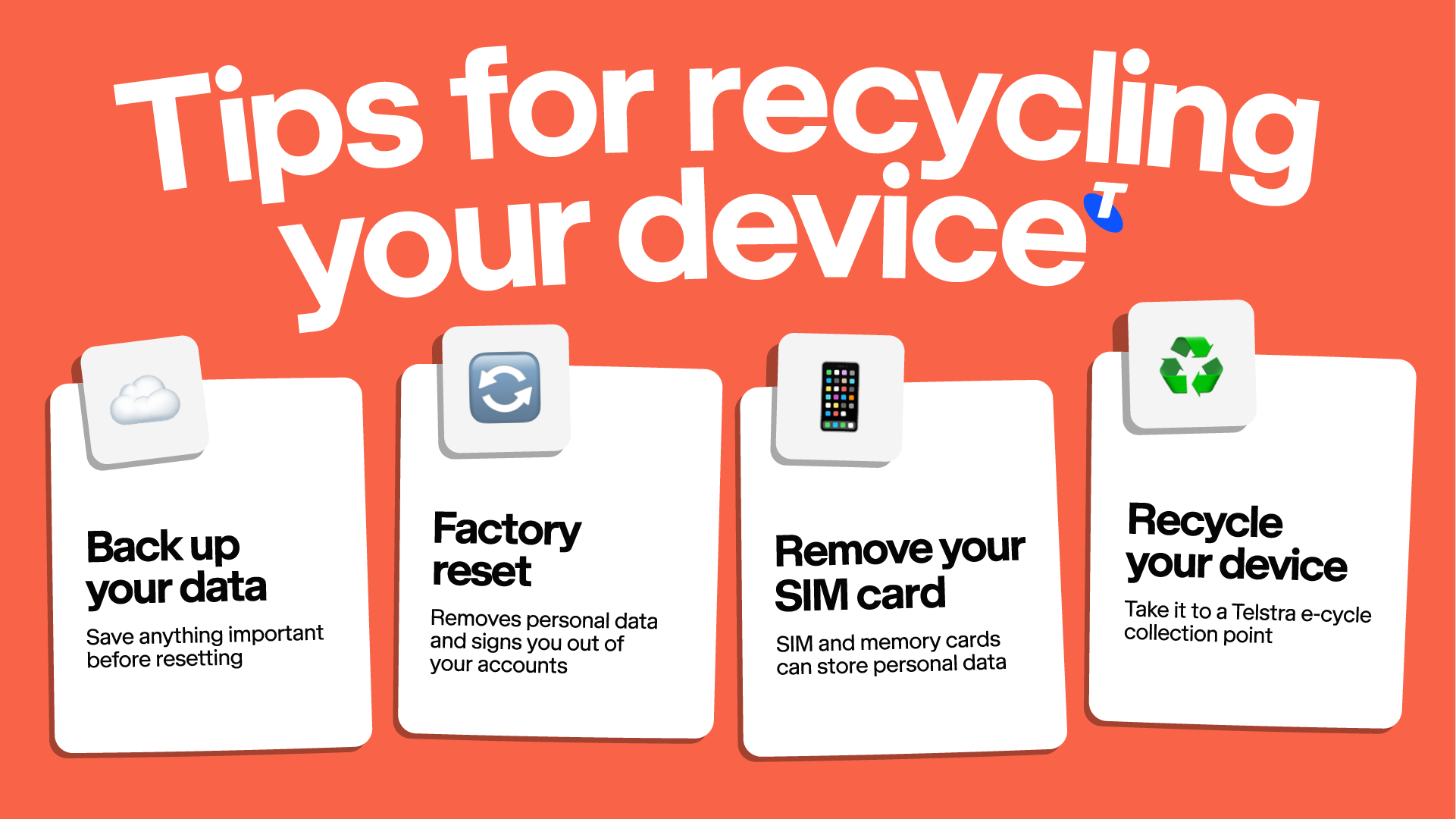
You can recycle in a safe and secure way at your nearest Telstra store. Some of the devices you can recycle through Telstra:
- Mobiles and tablets
- Mobile batteries and chargers
- Mobile wireless internet devices
- Mobile accessories
- Modems and Routers
- Home phones
- Smart watches and fitness trackers
- VR headsets and accessories
- Telstra TV set top boxes
- Power supply unit for Telstra Smart Modems
We are focused on developing our donation program to deliver both greater digital inclusion while improving environmental outcomes.
Your phone, tablet or smartwatch could be worth credit if it's eligible for Telstra Trade-In. Use the Trade-In Estimator to get a rough idea of its value. If you like the estimate, request a trade-in to start the process and receive your final trade-in value.
This is a crucial first step in recycling. Be sure all data is permanently wiped from your device before it's picked up or dropped off. The recycling process doesn't include data wiping, only destruction.
YouGov Research Methodology
This research was conducted by YouGov between 8–12 January 2026 via an online survey of 1,050 Australians aged 18+. The sample is nationally representative by age, gender and region, sourced from the YouGov panel. Panellists are incentivised through a points-based rewards system redeemable for cash or vouchers. The questionnaire was designed by YouGov in collaboration with Herd MSL. Following fieldwork, results were weighted to the latest ABS population estimates to ensure national representation.
*vs a goal of 650,000
**achieved 94% vs a goal of 90% by 2025 (Telstra Sustainability Report 2025)
By Tom Penny
-
-
Today we released Telstra’s FY26 sustainability reporting suite, including the 2026 Bigger Picture Report, 2026 Modern Slavery Act Statement and Our Approach to Nature Action report. Together, these documents show the progress we're making to build a more connected, inclusive and sustainable future.
-
We’re extending our existing WorkVentures partnership, with a grant of just under $3 million to scale the initiative from an early-stage Telstra Foundation funded initiative into nationally coordinated digital inclusion infrastructure.