If you spend time in Western Australia, one thing becomes clear very quickly: people here are used to thinking on a big scale. Big distances. Big industries. Big ambitions.
What is spectrum and why does it matter
Spectrum isn’t just a technical resource - it’s the strategic foundation that powers Australia’s connectivity, drives productivity across industries, and underpins the technologies shaping our future.
Shailin Sehgal · 07 November 2025 · 3 minute read
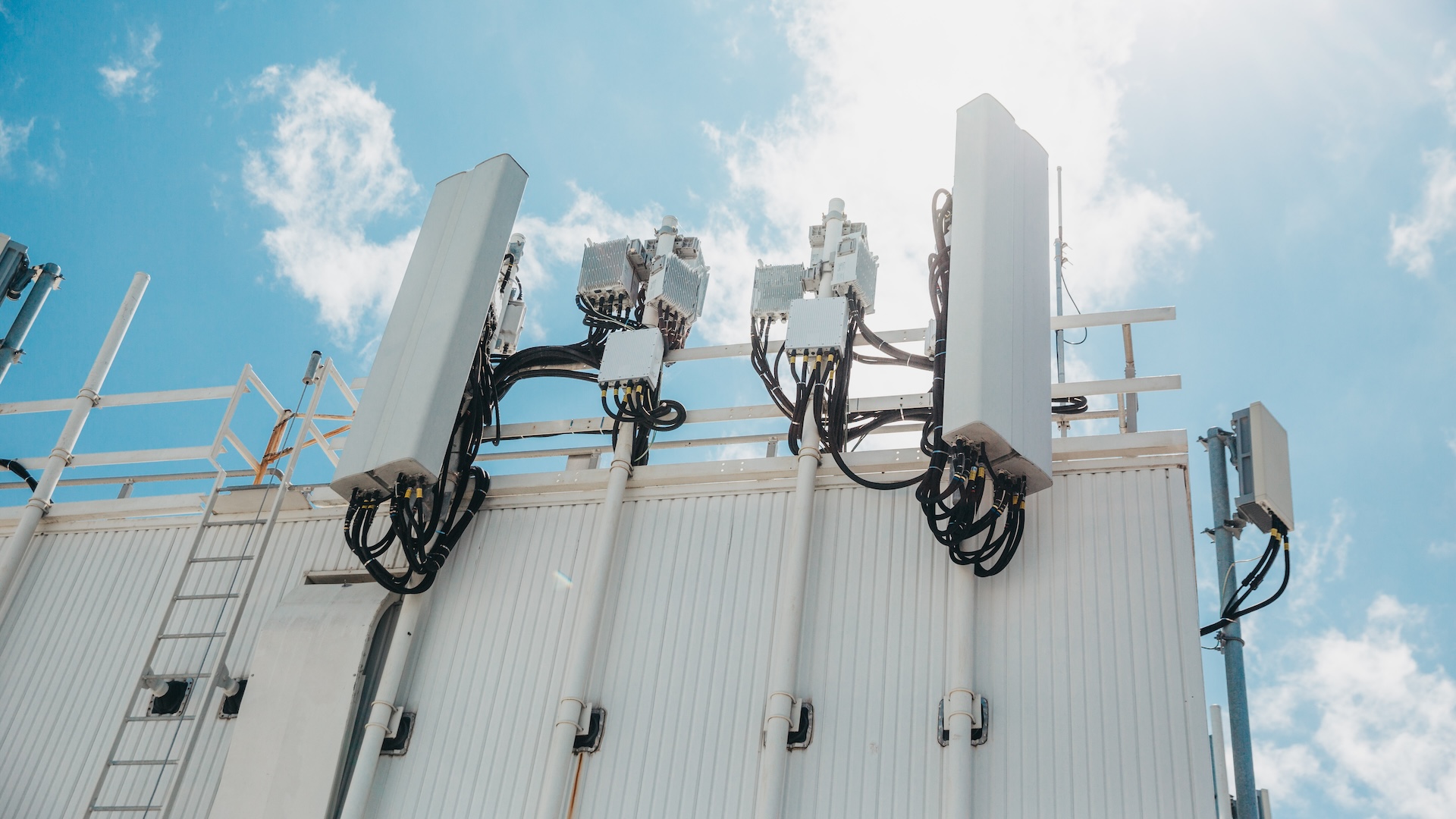
As Australia races toward a more connected, intelligent future, one critical resource underpins it all: spectrum.
It’s the invisible foundation that enables wireless communication. It powers everything from mobile networks to Wi-Fi to broadcast TV, and radio.
Industries as diverse as agriculture, mining, logistics, and healthcare rely on radio frequencies to operate safely, efficiently, and in real time. Spectrum isn’t just a technical asset - it’s foundational to how we live, work, and innovate.
But spectrum is finite and demand is accelerating.
Emerging technologies such as AI, satellite direct to mobile, smart farming, and remote patient monitoring require faster, more reliable wireless connectivity. Without a coordinated national strategy, we risk spectrum bottlenecks that could stall innovation, disrupt essential services, and deepen the digital divide - especially in regional and remote communities.
To stay globally competitive and digitally inclusive, Australia must treat spectrum as critical infrastructure and plan for its future with urgency and clarity.
Why spectrum matters and how it works
Spectrum is the silent enabler of modern Australia - driving connectivity, efficiency, safety, and innovation across every sector.
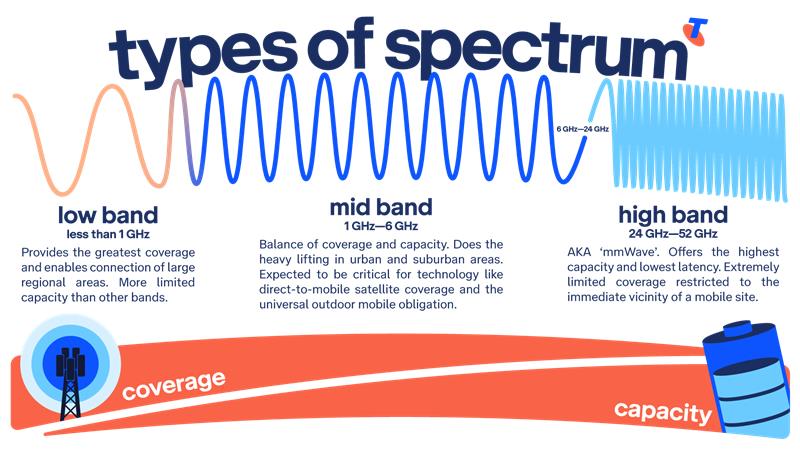
But not all spectrum is the same. There are three main groups of spectrum frequency ranges: low-band, mid-band, and high-band (also known as mmWave). Each plays a unique role in how we stay connected:
Low-band spectrum (below 1 GHz) travels long distances and penetrates buildings well, making it ideal for wide-area and indoor coverage - especially in regional and remote Australia.
Mid-band spectrum (1-7 GHz) offers a balance of coverage and capacity, making it the workhorse of 5G networks in suburban and urban areas.
High-band spectrum (24 GHz and above) carries massive amounts of data at ultra-fast speeds but over short distances. It requires dense infrastructure like base stations and small cells, making it perfect for high-traffic environments like stadiums, transport hubs, and city centres.
Won’t UOMO solve any spectrum issues?
No - UOMO (Universal Outdoor Mobile Obligation) means Australian mobile operators need access to additional spectrum to connect mobile devices directly to satellites. Mobile satellite services (MSS) spectrum (for example, 2GHz mid-band spectrum) is ideally suited to delivering these services, but under the ACMA’s proposed auction rules, only satellite providers are eligible to bid for licences. That means mobile operators are locked out of directly obtaining this spectrum
Will more spectrum solve congestion?
In some locations, yes, but it’s only part of the picture. Think of spectrum like lanes on a freeway: more lanes allow more data to travel, helping reduce congestion during peak times. But just like freeways need on-ramps and exits, spectrum needs supporting infrastructure - like mobile towers, fibre backhaul, and power - to be effective.
More spectrum adds capacity to help reduce both existing and emerging congestion caused by growing demand. It is also critical to the deployment of new technologies, like 6G and satellite-to-mobile.
But not all spectrum is equal - each band has a different role.
To be effective, the right spectrum bands must be used in the right places. This is especially important in regional and remote Australia, where population is sparse and distances are vast. Here, low-band spectrum plays a critical role. Lower frequencies travel further and penetrate terrain better, meaning fewer towers are needed to provide wide-area coverage. That makes it ideal for highways, regional and remote communities, and places where access to mains power or fibre is limited.
By Shailin Sehgal
-
-
Temporary Disaster Roaming (TDR) arrives from 1 October. Here's how it works, when we can and can’t turn it on, and how it fits with the backup power, satellites and payphones we lean on when severe weather hits.
-
For those living in some of Australia's most remote locations, a reliable home phone remains an essential link to family, services and support. We're helping customers transition from ageing USO satellite voice services to modern connectivity solutions.