Making sense of Australia’s new mobile coverage maps standard
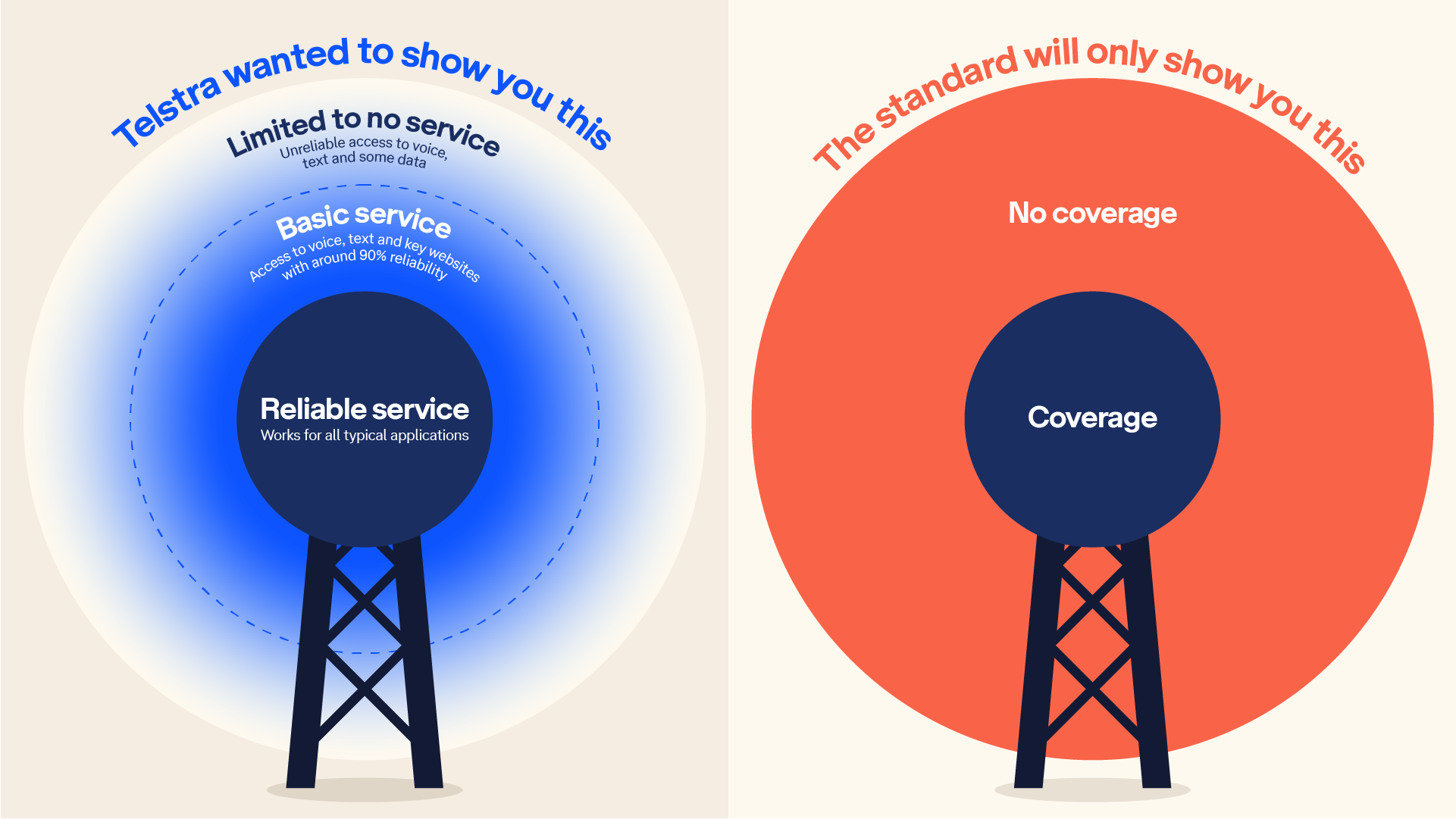
The Australian Communications and Media Authority’s (ACMA) new coverage map standard sets out to make it easier for people to compare mobile coverage. But, by excluding lower signal strength, it could make it harder for Australians, especially in regional areas, to understand where their phone will work.
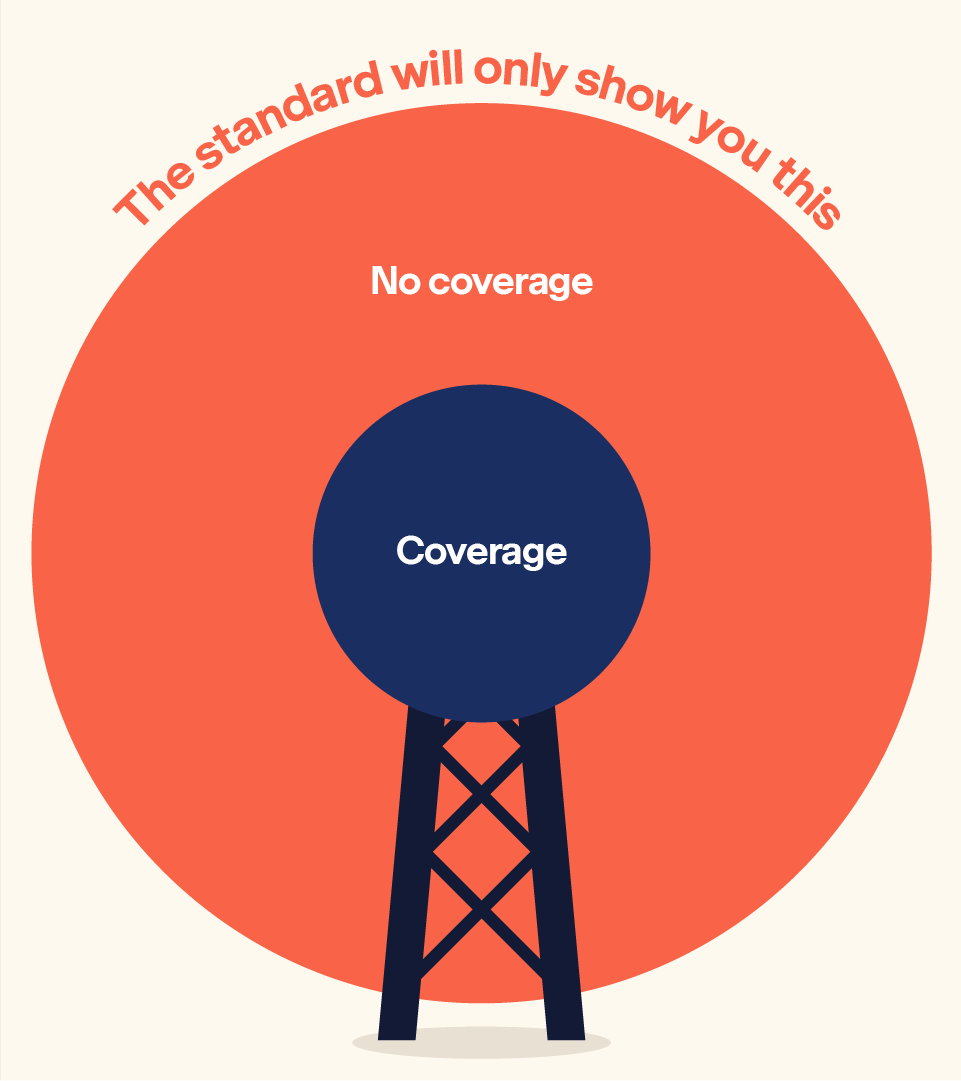
The standard specifies that any mobile signal below -115 dBm will now be labelled ‘no coverage’ on comparable mobile coverage maps.
Every month, more than 1.5 million Telstra customers use this coverage as they live, work and travel through regional and remote Australia.
Telstra supports a single, consistent standard that helps customers compare coverage across providers, but a standard that does not permit mobile network operators to show usable coverage could make it much harder for customers to access the information they need.
How the new standard could impact customers
Coverage maps inform real decisions. Families check them before planning driving routes, businesses use them to decide where they can operate, and regional customers use them to work out if they need antennas or other equipment. When a map says ‘no coverage’ in places where phones will still work, that may lead people to avoid towns and tourism destinations, purchase unnecessary devices and miss opportunities – not because coverage is missing, but because the map won’t show it.
No coverage map, from any provider, can guarantee service at a particular time or exact location. That's because all maps are predictions based on extensive modelling and real-world testing. Our goal should be to make them as accurate as possible and to categorise coverage in a way that helps customers know what to expect, while being conscious of the limitations.
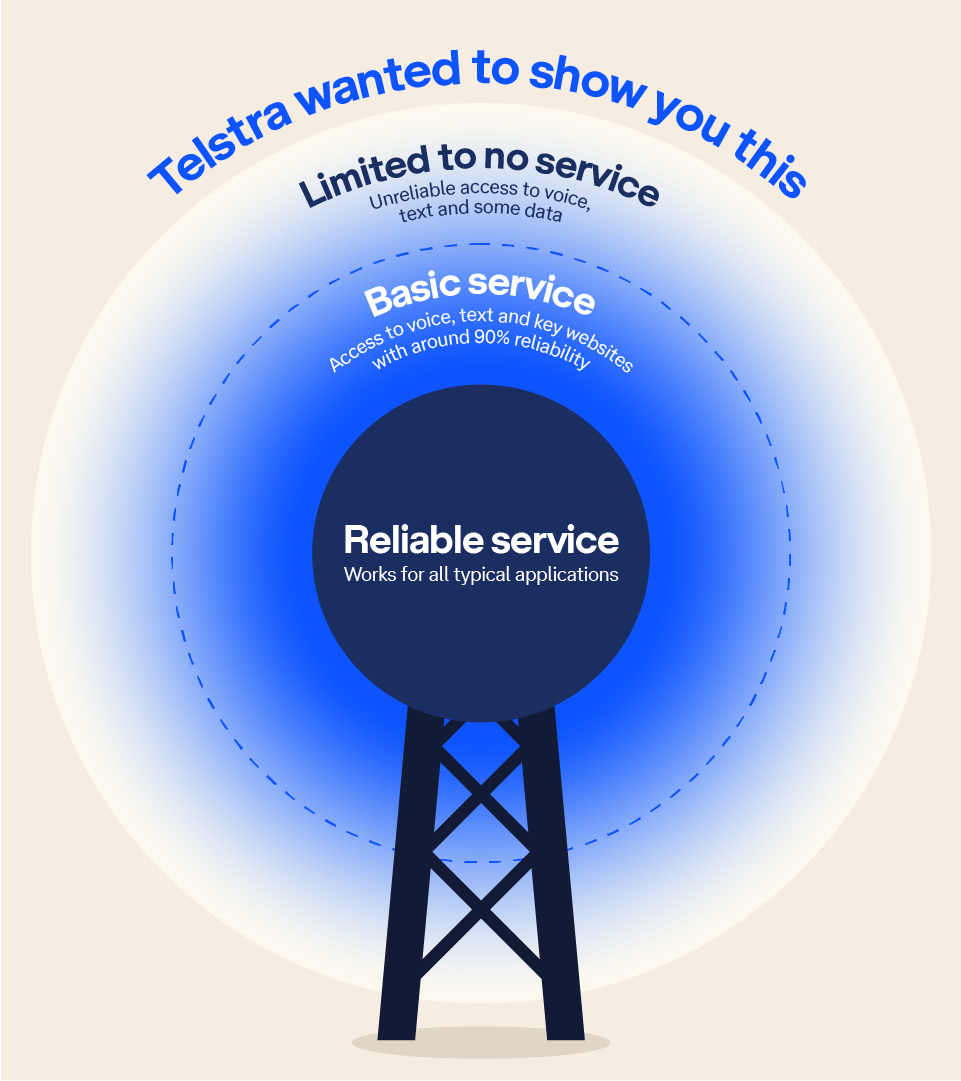
If a map says ‘no coverage’ but a customer can still call, text or get online nine out of ten times, there’s a very real risk of confusion.
The standard also creates an artificial gap on coverage maps between where regular terrestrial mobile service ends and where satellite-to-mobile (STM) coverage begins. A customer's phone will only switch to STM once it loses access to normal terrestrial service, which happens at signal levels beyond -122 dBm. If coverage maps treat any terrestrial signal below -115 dBm as non-existent, they exaggerate when satellite service is necessary. This can set unrealistic expectations, especially since satellite services currently support only SMS, not voice calls.
Nothing has changed about Telstra’s network. No sites have been switched off. No coverage has been removed. Telstra’s network remains vastly larger with over 2,000 more mobile sites than any other network across Australia. Our coverage advantage in regional and remote areas, is even larger. The only thing that has changed is what will be shown on a comparable map.
The standard doesn’t match the real-world experience of customers
In areas that will now be labelled ‘no coverage’, past usage patterns show:
- More than 1.5 million Telstra customers use this coverage every month
- Around 57,000 emergency calls are made each year
- Every day, customers make 700,000 voice calls, send 750,000 texts, and use 300TB of data – that's roughly 100 million photos taken on a smartphone
This is coverage regional Australians, and those who travel through these areas rely on.
Third party testing confirms what our network data shows every day
We presented evidence as part of the process that challenged a hard limit of -115 dBm being set.
- The Government’s own National Audit of Mobile Coverage recognises usable coverage exists out to -122 dBm, where a customer can make calls, send texts and access basic data outdoors
- Third party testing in late 2025 involved 60,000 kilometres of driving using a standard smartphone without an external antenna. That testing showed that more than 90% of the time, customers using our network at -122 dBm (well below -115 dBm) could load web pages within seconds, start apps without excessive delay, and make clear voice calls
- The GSMA – the global industry body that represents over 1,000 mobile network operators – recognises maps should reflect usable outdoor coverage out to -120 dBm.
We’ve invested to make our network perform differently
It's no coincidence that our mobile network provides coverage in areas where others don’t.
Over the seven years to 30 June 2025, we’ve invested $12.4 billion in our mobile network nationally including $4.7 billion in regional Australia alone. That sustained investment is why Telstra remains Australia’s largest and most extensive mobile network, reaching further than any other.
But this isn’t just about how many more mobile sites we operate. It’s about how our network performs at the edge, in regional and remote areas, over long distances, and in places where coverage is hardest to deliver but matters most.
For decades, we’ve deliberately engineered our network to perform in these conditions. That includes technologies and design choices that allow our network to deliver a usable service at lower signal levels.
One example is the use of something called Cell Extension where we’ve worked with Ericsson to double the distance from a base station in which a device can connect to available 4G signal from 100km to 200km.
These types of features mean that if two people are at the same distance from a base station, a Telstra customer may still be able to call, text and use data, while someone on another network without this feature may be unable to.
We offered a path forward
We agree with the intent behind the coverage map standard. A common approach, done properly, that helps customers make better choices is the right goal and we’ve supported it from the start.
We also recognise that customers don’t want coverage maps that over promise or create a false sense of confidence. That’s not what we’ve advocated for.
When we saw the draft standard, we responded with a fact-led approach that would have kept maps comparable while clearly explaining what customers can expect at different coverage levels. It would have provided a transparent way to better reflect real world experience making the maps more useful for the many people who rely on them.
What is clear to regional Australians, though, is that Telstra has the largest mobile network in the country. Regional Australians know that if they want maximum coverage, they choose Telstra.